Showing posts with label Discover News. Show all posts

Thursday, June 20, 2019

World's First Flying Car Enters Production

World's First Flying Car Enters Production

In a moment we've been waiting for since the first time we saw The Jetsons, the first flying car has finally gone on sale. Just like the car George uses to drop off the kids, the Moller M200G Volantor is shaped like a saucer. To avoid the need to pass FAA regulations, the civilian version of the Volantor is restricted to heights of 10 feet, but can travel as fast as 50mph and fly for up to 90minutes. Military or rescue versions could be unencumbered by such limitations. Depending on the number of orders, prices could be as low as $90,000. Video of the Volantor in action after the jump.

The Moller M200 Flying Car


Moller, better known for the yet-to-reach-production Skycar, have already started work on the 67 orders received so far. They envision uses including extreme off roading - the Volantor is unencumbered by any ground-based obstacles - or as a ferry between a yacht and the land. In the long run, they'd like to see the vehicle used as the ultimate congestion busting commuter. Maximum payload is 250 pounds, so you'll need to buy one for each adult member of the family.

The company is actively seeking military or government clients, who they suggest could use the vehicle for anything from skyscraper rescues to fire fighting.
MOLLER INTERNATIONAL LAUNCHES PRODUCTION OF JETSONS-LIKE GROUND-EFFECT VEHICLE Davis, CA, [June 28, 2007]--Moller International (OTCBB: MLER) has completed tooling and has begun producing parts for its Jetsons-like M200G volantor, a small airborne two passenger saucer-shaped vehicle that is designed to take-off and land vertically

The M200G is the size of a small automobile and is powered by eight of the Company's Rotapower® rotary engines. This vehicle is intended for operation continuously in "ground effect" up to approximately 10 feet altitude.

Dr. Moller calls the M200G, "the ultimate off-road vehicle" able to travel over any surface. "It's not a hovercraft, although its operation is just as easy. You can speed over rocks, swampland, fences, or log infested waterways with ease because you're not limited by the surface. The electronics keep the craft stabilized at no more than 10 feet altitude, which places the craft within ground effect where extra lift is obtained from operating near the ground. This lets you glide over terrain at 50 mph that would stop most other vehicles" he continued. While the Company does not foresee the requirement for significant training or licensing to operate the vehicle, it is prepared to offer demonstration sessions in Davis, California once the vehicle is ready for market.

Production on the initial six airframes started earlier this week using hard-tooled molds with the capability of producing one fuselage per day.

Depending upon engine production volume the M200G price could start as low as $90,000. The key component in determining the M200G production price is the cost of its Rotapower® engines. The Company is working with a strategic partner to produce this engine for a number of different applications in order to obtain the cost benefits of high volume production. Persons interested in purchasing a M200G volantor may reserve a delivery position by making a refundable escrowed deposit.
Source:-jalopnik

Monday, February 5, 2018

African Snails Used Sewage Plant Monitor Levels Toxic Chemicals

Mollusc maintenance: Six African snails fitted with heart monitors and sensors are being used to monitor pollution levels at a sewage treatment site in St Petersburg
Fancy shelling anti pollution device African snails used sewage plant monitor levels toxic chemicals

It's a snail-paced solution to pollution problems.

But a St Petersburg waterworks is putting six giant gastropods to work monitoring emissions from a sewage incinerator.
The African snails, the size of small rats, are attached to sensors that will show them getting sick if they take in too much bad air.

Environmentalists have said the move is just a publicity stunt aimed at distracting attention from unsafe practices at the incinerator.

But the company, Vodokanal, said it was a serious attempt to improve control over what comes out of the smokestack.

The plant uses conventional gauges to check emissions, but company officials said it also wanted to keep an eye on compounds that might be produced in concentrations too low for the gauges to detect or that could harm humans if combined with other substances.

Olga Rublevskaya, director of wastewater disposal at Vodokanal, said: 'Live organisms won't deceive anyone about the danger of pollution.

'This is very strict control for us. Now we are under the watch of snails and crayfish all the time!'

The company is also using crayfish to monitor the quality of city water.

The snails, which grow up to eight inches long, live in a fish tank inside the city's Southwest Waste Water Treatment Plant.

They are attached to sensors that measure their heartbeat and other vital signs. Three breathe clean air, the other three diluted air coming from the plant's chimney.

If the sensors register an unfavourable change in their behaviour and condition, it would be an immediate signal that air coming from burnt sewage residue was dangerous.

'The African snails, which are able to live for up to seven years, will also help to test the influence of possible accumulating substances over a long period,' said Sergei Kholodkevich, an ecological researcher who dreamt up the idea of using the creatures.

Mr Kholodkevich, who works at an institute of the Russian Academy of Sciences, said he chose snails because they had lungs and breath air 'like people do'.

But Dmitry Artamonov, who heads Greenpeace's St Petersburg office, accused Vodokanal of hiding information about the plant's effects on the environment.

'The issue is that the local treatment facilities are meant for treatment of domestic waste, but not for treatment of industrial waste that contains toxic substances and also gets dumped into the sewage waters,' he said.

'As for snails, it can be hard for them to indicate the environmental danger immediately, because such substances as dioxins, for instance, can accumulate in an organism over a long period of time and only decades later provoke cancer.'


Snail sewage? Three of the creatures breathe clean air, while three have air from the chimney at the incineration plant


Sensitive: The company behind the scheme, Vodokanal, also uses crayfish to monitor water pollution


Novel approach: The South-West Waste Water Treatment Plant in St Petersburg, where the snails live

Sunday, February 4, 2018

Two Headed Snake In Oddballs Show | Rare Double Head Animals Found

A two-headed albino snake is the star attraction drawing the crowds to one of everyone's favourite events of the year - the exhibition of natural world oddballs in Switzerland.

The Basel show features all manner of weird and wonderful animals, from mammals to marsupials.

But it seems the one area everyone is drawn to this year is the reptiles house - which, this month, is the home of the world's most unusual snake, Mince.

This twin-credible freak of nature is an albino garter snake which boasts two heads - making it look even more intimidating than normal.

He is the only two-headed albino snake in the world, according to its owner Tom Beser, who also claims he could command offers well into five figures to buy the animal.

'There are eight of these two headed snakes in the world, albino and normal. But this is the only snake which is both two headed and albino,' he said.

'One collector was offered more than £13,000 for his two headed garter snake and his wasn't an albino.

'Mince would be worth much more.'

Saturday, January 13, 2018

Fluorescent Luminous Green River is Blamed on Pranksters


Canada's Goldstream River failed to live up to its name when its waters bizarrely started flowing a fluorescent Luminous green.

The river, which runs through the city of Langford in British Columbia, looked like the result of a radioactive disaster and an investigation was launched immediately.

What caused the river to change colour was a mystery at first, but investigators swiftly discovered an organic compound used as a dye to test water systems was to blame.

Colourful: The Goldstream River started flowing fluorescent green after hoaxers added an organic dye to the water

But as no tests were being conducted on the day the Goldstream River turned green, officials immediately pointed the finger at pranksters.

Tyson Elder was hiking along the river with friends photographing Bald Eagles when he saw the fluorescent green water on December 29.

Tyson, 24, from Victoria, British Columbia, said: 'In the distance all I could see was bright neon green - it looked like coolant.

'To see something so bright and unexpected was kind of unnerving, especially because it is a popular tourist destination.

'In the winter the Bald Eagles mate and nest there so we were worried about what it would do to the animals. Luckily tests showed it was not toxic.'

News of the neon-green waters spread fast after Tyson posted images on his Twitter site.

'Everyone was shocked by what they saw,' he said. 'It was big news. It was picked up by radio stations and people were flooding to the park.

'No-one seemed to know what was going on. It was quite an interesting day.'

Tyson, a photographer who also works in mediation, said the water ran green over a stretch of 400 metres for about three hours.

His friend had a camcorder and the video on YouTube has been viewed around 550,000 times.

Langford Fire Chief Bob Beckett blamed the greening of the river on unidentified pranksters.

'In all likelihood it's a hoax, but it's unfortunate we had to utilise all sorts of resources to investigate this,' he said.

Fluorescein, which is also used as a tracer in medical procedures, can cause allergic reactions, according to Vancouver Island Health Authority officials.

'It does not have a high toxicity, but it can cause allergic reactions,' said medical health officer Murray Fyfe.

Local resident Bruce Bradley, 27, said: 'It looked like the result of a radioactive disaster. I was half expecting to see two headed fish swimming about.

'It was quite incredible to see, it was really bright. A few guys were spooked by it all at first. It was bizarre.'

The substance is not believed to have affected fish populations, and according to the Montreal Gazette, the river turned back to its regular colour within an hour.


Watch Video

Wednesday, January 10, 2018

EN-V - Electric Battery Power Concept Motor Car Engine 2011

An electric car is a plug-in battery powered automobile which is propelled by electric motor Car designers have come up with the perfect solution for all those motorists tired of traffic jams and lack of parking spaces.

The two-seat EN-V (Electric-Networked Vehicle) is designed to alleviate those common driver concerns - as well as address environmental issues, energy consumption and affordability.

And amazingly you don't even need to be in the driving seat to achieve all this.

The EN-V from General Motors can rotate 360 degrees and be driven in manual mode with a driver - or without.

The General Motors concept runs on battery power for about 25 miles on a charge, with top speeds of 25 miles-per-hour.

The only downside to this pint-sized vehicle is its' inability to withstand a collusion with a full-sized vehicle.

Cities could, however, create EN-V-only lanes, or alternatively, create enclosed areas solely used by the vehicle.

There is no timeframe yet for when the EN-V will be on the market.

Tuesday, January 9, 2018

Flying Fish | Fact | Pictures | Videos


Exocoetidae, is a family of marine fish in the order Beloniformes of class Actinopterygii. Fishes of this family are known as flying fish. There are about 64 species grouped in seven to nine genera.

Flying fish live in all of the oceans, particularly in warm tropical and subtropical waters. Their most striking feature is their pectoral fins, which are unusually large, and enable the fish to hide and escape from predators by leaping out of the water, taking short gliding flights through air just above the water's surface. Their glides are typically around 50 metres (160 ft).

In order to glide upward out of the water, a flying fish moves its tail up to 70 times per second. It then spreads its pectoral fins and tilts them slightly upward to provide lift. At the end of a glide, it folds its pectoral fins to reenter the sea or drops its tail into the water to push against the water to lift itself for another glide, possibly changing direction. The curved profile of the "wing" has an aerodynamic shape that is comparable to that of a bird wing. The fish is able to increase its time in the air by flying straight into or at an angle to the direction of updrafts created by a combination of air and ocean currents.

Genus Exocoetus has one pair of fins and a streamlined body to optimize for speed, while Cypselurus has a flattened body and two pairs of fins which maximizes its time in the air. From 1900 to the 1930s, flying fish were studied as possible models used to develop airplanes.

Exocoetidae feed mainly on plankton. Predators include dolphins, tuna, marlin, birds, squids and porpoises.


Tuesday, August 16, 2011

Scientists Claim Human Brain May Have Reached Full Capacity

Scientists Claim Human Brain May Have Reached Full Capacity

Scientists claim the human brain is at capacity and is too tiring to get smarter


We've invented penicillin, space shuttles, computers and even artificial hearts, among many other wonders. So where will human intelligence go from here?


The answer, if certain scientists are correct, is nowhere.


Mankind’s brain power has reached its peak and it is physically impossible for us to become any smarter, they say.


They claim that in order to become any more intelligent the human brain would need vast amounts of extra energy and oxygen – and we simply cannot provide it.


Cambridge University researchers have analysed the structure of the brain and worked out how much energy its cells use up.


Simon Laughlin, professor of neurobiology, said: ‘We have demonstrated that brains must consume energy to function and that these requirements are sufficiently demanding to limit our performance and determine design.


'Far-reaching powers of deduction demand a lot of energy because for the brain to search out new relationships it must constantly correlate information from different sources.


‘Such energy demands mean there is a limit to the information we can process.’


Other scientists claim that the brain’s ‘wiring’ or network of fibres linking different areas to one another cannot get any better.


They have found that the cleverest people have the best wiring, with messages carried very quickly between different parts of the brain.


But scientists claim that the wiring would need vast amounts of extra energy to become more efficient. As before, they say it is impossible for humans to provide this, therefore we cannot get cleverer.


Ed Bullmore, professor of psychiatry at Cambridge, where he specialises in brain imaging, measured the efficiency with which different parts of the brain communicated with each other.


He found impulses travelled fastest in smarter people and slower in those who were less intelligent.


He said: ‘High integration of brain networks seems to be associated with high IQ.


‘You pay a price for intelligence. Becoming smarter means improving connections between different brain areas but this runs into tight limits on energy, along with space for the wiring.’


Martijn van den Heuvel, assistant professor of psychiatry at Utrecht medical centre in Holland, who also studies how differences in the wiring of human brains affects IQ, said: ‘Increasing the power of the brain would take a disproportionate increase in energy consumption.


'It is risky to predict the distant future but it is clear there are tight constraints on intelligence.’

Saturday, June 18, 2011

Raw Fish to Remedies Asthma | Natural Cure For Asthma Treatment

Asthma
Asthma

Curing From asthma Attack : A 166-year-old Indian medical practice has sparked the ire of a children's advocacy group, which claims the controversial tradition is potentially hazardous to youngsters' health.

As the BBC is reporting, Balula Hakkula Sangham wants children under the age of 14 to be exempt from a procedure which involves swallowing small live fish with herbal paste. The practice, which is typically administered to thousands at a two-day festival in the state of Andhra Pradesh, is thought to permanently cure asthma.

The AFP quotes a petition started by the group as saying, "The process of giving the medicine is unhygienic as the person gives it to lakhs (hundreds of thousands) of people without washing their hands." Balula Hakkula Sangham officials are also said to have slammed the unorthodox medicine as "unscientific" and a violation of human rights.

Claiming to have received the medicine recipe from a Hindu saint in 1845, Goud family members have fought back against the criticism. "It has been the practice of the Goud Family for the past 166 years to offer this medicine free of cost to those who need it," Bathini Harinath Goud, head of the family, said. He went on to note that 400,000 people participated in the fish-swallowing procedure last year. "These companies are paying money to rake up the issue as they are worried about the fish medicine affecting their business interests since what we administer is a permanent cure for asthma," he said.

The Times of India reports that the family has faced criticism for the practice previously, and had to rename it after a court order over the use of "medicine" for what is arguably a faith-based therapy.

Andhra Pradesh's Human Rights Commission on Tuesday has reportedly ordered a report into the complaints, which is expected to be delivered this week. Source :-huffingtonpost

Sunday, May 15, 2011

Chinese Woman with Horn in Her Forehead | Woman Horn

Woman with Horn
Woman with Horn

After more than an hour of surgery, the woman ? commonly called Yanv- who grew a big horn on her head has finally got rid of the giant horn. Doctors from Treatment Center of Skin Diseases in Beijing Military General Hospital told the reporter that the surgery was successful. The woman is awake and will be discharged from the hospital in a week.

The woman is from Zhanggang village, Dengzhou city, central Chinas Henan province. She was born deaf and dumb. No one knows her exact name. Local villagers call her Yanv (means dumb girl in Chinese). Early in 2008, a fingernail-sized foreign object started growing on the left forehead of the poor woman. Her family took her to the county hospital to remove the growth. However, less than 6 months after the surgery the object grew again in the same position. After spring festival in 2011, the horn-like looking object grew faster and had reached already a size of more than 20 cm. The womans weird growth scared the villagers and she hardly dared to go outside. Finally her son and daughter took her to seek medical help in a hospital in Beijing. The doctors said that they rarely saw such a giant horn. Because the biopsy results for the horn were benign, doctors decided to have surgery on the womans horn

Woman with Horn
Woman with Horn


Woman with Horn
Woman with Horn


Woman with Horn
Woman with Horn

Sunday, April 24, 2011

Oldest Television In History | First Early tv

Television
Television

If you were in the market for a new TV and had £17,000 to spend, we guess you'd want something 3D, HD and with a bigger screen than we've got walls.

But someone recently splashed out £16,800 on Britain's oldest working TV -- which has a 12-inch black and white screen.

The 1936 Marconi type–702 television - which was originally bought for £100 - had been expected to sell for £5,000 when it was auctioned by Bonhams.

Hopefully the new owner will have more luck than the first... three days after the purchase the Crystal Palace transmitter burned down and they couldn't receive pictures again until 1946.
A spokesperson for Bonhams said of the bidding war: "It is very rare. There are more authentic Stradivarius violins in existence than pre-war televisions."

Friday, April 22, 2011

Insects In Amber Fossils Oldest In The World

Amber Fossils
Insects In Amber Fossils


Amber is fossilized tree resin (not sap), which has been appreciated for its color and natural organic beauty since Neolithic times. Amber is used as an ingredient in perfumes, as a healing agent in folk medicine, and as jewelry. There are five classes of amber, defined on the basis of their chemical constituents. Because it originates as a soft, sticky tree resin,

These incredible pictures show tiny insects that were preserved in precious amber stones - 20 million years ago.

The tiny creatures are believed to have roamed the earth alongside dinosaurs and before the ice age three million years ago.

According to the Daily Mail, specimens from the period are rare but they were amazed when they unearthed the almost perfectly preserved creepy-crawlies in northern Peru.

They were found inside small chunks or precious amber rock in a 20 million year old reservoir in Chiclayo, northern.

Honningen Klaus, who led the research team, said: 'The pieces of amber contains insects Psocoptera, Diptera, Coleoptera, Hemiptera and spiders, as well as spores and pollen fossils, and even a drop of blood and remains of hair from a mammal rodent.'

The research team was from the Meyer-Honningen Paleontological Museum in Peru.

Saturday, March 26, 2011

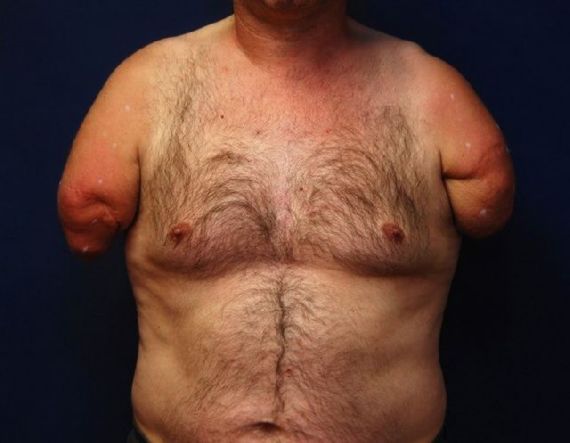
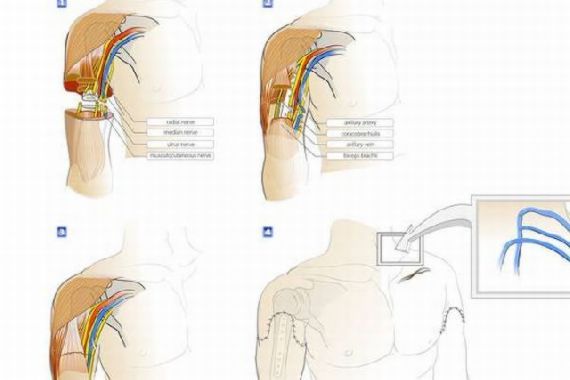
Karl Merk - Double Arm Transplant In The World | The Health Care Blog

Karl Merk - Double Arm Transplant In The World

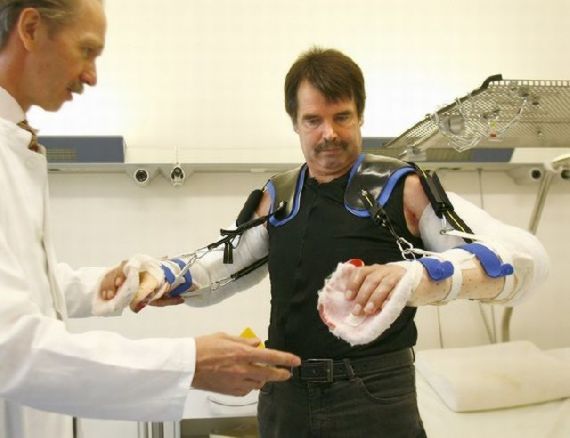
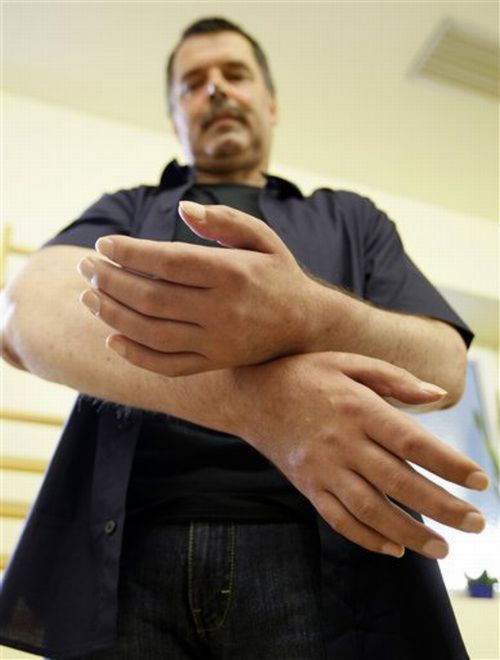
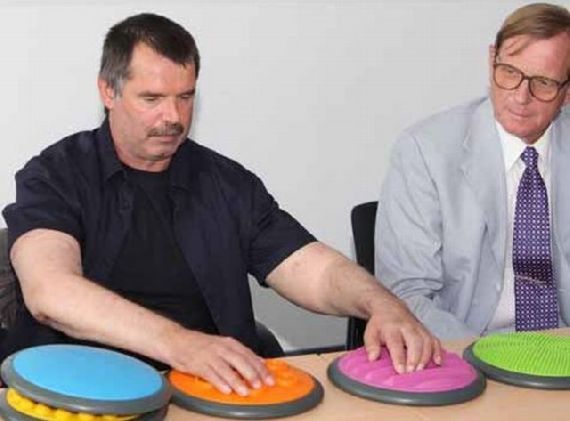
The recipient of the world's first complete double arm transplant scratched his head and back and beamed at his doctors Wednesday, saying he was on the path to independence a year after the pioneering operation.

Farmer Karl Merk, who lost his arms just below the shoulder in a 2002 combine harvester accident, demonstrated the progress he has made by scratching the back of his head with his right hand and squeezing rubber discs at a press conference near his home in southern Germany.

In July 2008 he underwent a 15-hour surgery at the Munich University Clinic by a team of 40 doctors, nurses and anesthesiologists.

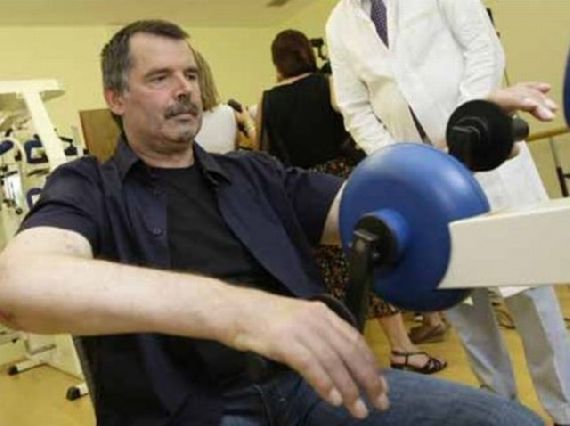
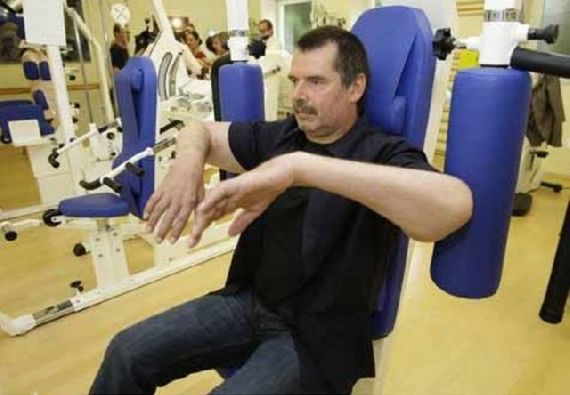
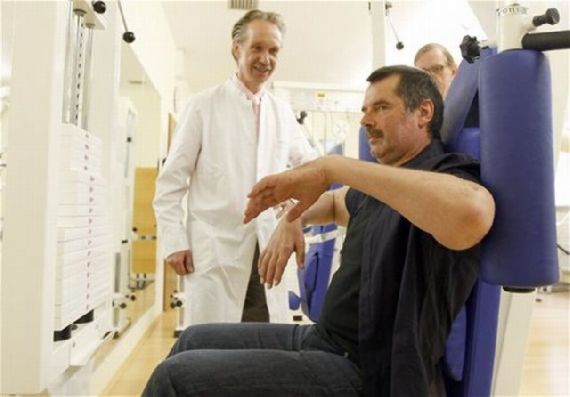
His doctors originally thought it would take up to two years before the nerves in his arm would regrow sufficiently to permit movement, but the 55-year-old has made more progress than expected through an intensive program of physiotherapy and electric stimulation.

"My biggest dream is just that my fingers will keep improving, that I can pick things up and just be self-reliant again," he told reporters.

Wearing a black short-sleeved shirt that clearly showed where the arms were connected, Merk demonstrated how he can wave them without the aid of the numerous braces and bandages he needed after surgery.

Merk and his doctors said they hope his story will serve as an inspiration for others who might need such a surgery, but have hesitated to go forward.

Karl Merk - Double Arm Transplant In The World


Karl Merk - Double Arm Transplant In The World


Karl Merk - Double Arm Transplant In The World


Karl Merk - Double Arm Transplant In The World


Karl Merk - Double Arm Transplant In The World


Karl Merk - Double Arm Transplant In The World


Karl Merk - Double Arm Transplant In The World


Karl Merk - Double Arm Transplant In The World


Karl Merk - Double Arm Transplant In The World


Karl Merk - Double Arm Transplant In The World


Karl Merk - Double Arm Transplant In The World

Tuesday, March 1, 2011

Athens : Most Flirtatious City In The World | Athens Greece News


Athens : Most Flirtatious City In The World

Athens is the capital and largest city of Greece. Athens dominates the Attica periphery and it is one of the world's oldest cities, as its recorded history spans around 3,400 years.

Athens is the world's most flirtatious city but London ranks a lowly 57th, according to the compilers of the world's largest ever study of online flirting. Chilly Moscow came in at number two on the list of nearly 200 cities around the world, while Rome took eighth place and Paris – synonymous with romance – managed only to rank 38th.

The study of flirtatious behaviour online was carried out by Badoo.com, which claims to be the world's largest social networking site for meeting new people.

The "World Flirtation League" study ranked cities by the number of online flirtations initiated per month by Badoo users.

The average Athenian initiated 25.7 online flirtations per month, more than twice as many as people in Rio de Janeiro or Prague and far more than in Paris, London, Berlin or New York.

"Athens is a seductive city, with a hedonistic lifestyle", said Victoria Kyriakopoulous, author of The Lonely Planet Encounter Guide to Athens

"Athenians love to party and they love to talk. They love the game.

Flirting and sexual banter are not just a means to an end but part of social interaction. You can play without having to take it too seriously." Dr Simon Hardy, a British academic and author of the book, "The Greeks, Eroticism and Ourselves", said in ancient Athens the art of flirting was honed at drinking parties known as symposia, where men were entertained by dancing girls.

"It's probably fair to say that the Athenians perfected the art of flirtation in ancient times, especially at the time of symposia described by Plato."

The other cities to make it into the top 10 were Kuwait City, Baku in Azerbaijan, Tunis, Kiev, Beirut, Turin, and Bari in southern Italy.

Thursday, December 23, 2010

Full Double Rainbow Photos And Video


A Double Rainbow photographer Guy who has taken pictures real-life double rainbow lit up the Los Angeles area this evening -- all the way across the sky, according to witnesses.

A Double rainbow is an optical and meteorological phenomenon that causes a spectrum of light to appear in the sky when the Sun shines on to droplets of moisture in the Earth's atmosphere. It takes the form of a multicoloured arc, with red on the outer part of the arc and violet on the inner section.

A rainbow spans a continuous spectrum of colours; the distinct bands are an artifact of human colour vision. The most commonly cited and remembered sequence, in English, is Newton's sevenfold red, orange, yellow, green, blue, indigo and violet (popularly memorized by mnemonics like Roy G. Biv). Rainbows can be caused by other forms of water than rain, including mist, spray, and dew.

The Double Rainbow guy of Internet fame may soon have company on YouTube, as photos and videos of the sight are just beginning to surface.

Here are Images of the phenomenon so far, thanks to Twitter. Share your own Double Rainbow photo or video and we'll include it below!