How To Stop Smoking Ultimate quit-smoking system successful Tips to create simplest(Easy) & safest way to stop smoking forever and enjoy the wonderful natural freedom of becoming A non-smoker at long last
Are you a smoker?? if you're a smoker so you have to read this story. A man who is an active smoker for a long time, and he had a mouth cancer because of that so pity take a look of the Effects pictures below. i hope this story and this case might be a hard warning for every smoker in the world. stop your smoking habit before you got a mouth cancer like this guy..
Really disgusting huh?? so if you wanna stay healthy without that. stop your smoking habit right now.. remember smoking has many negative effect fpr your body.
In a growing number of countries, there are more ex-smokers than smokers. (In the U.S. as of 2010, 47 million ex-smokers and 46 million smokers.)
The immediate effects of smoking cessation include:
* Within 20 minutes, blood pressure decreases, pulse returns to its normal level * After 8 hours, carbon monoxide levels in the blood return to normal, oxygen level increases * After 24 hours, chance of heart attack starts to decrease; breath, hair and body stop smelling like smoke * After 48 hours, damaged nerve endings begin to recover; sense of taste and smell improve * After 72 hours, the body is virtually free of nicotine; bronchial tubes relax, breathing becomes easier * After 2–12 weeks, lungs can hold more air, exercise becomes easier and circulation improves
Longer-term effects include:
* After 1 year, the risk of coronary heart disease is cut in half * After 5 years, the risk of stroke falls to the same as a non-smoker * After 10 years, the risk of lung cancer is cut in half and the risk of other cancers decreases significantly * After 15 years, the risk of coronary heart disease drops, usually to the level of a non-smoker
Mengru Kang, 1 year pregnant girl with her twin brother
Shocking event for Chinese medicine, which found that only a year a girl is pregnant,
Mengru Kang was taken to hospital after unexplained stomach was swollen much.After ultrasound, the doctors found amazed that the girl has a baby in the womb, the child's twin brother.Doctors say that the embryo was not caught in the womb and has found another place to grow.
Little will undergo a Cesarean delivery will suffer.This unusual phenomenon, very rarely is numneste "fetus in fetus" and can be met once every 500,000 pregnancies.
STUNNED doctors have discovered a one-year-old girl is carrying a BABY in her tummy.
Little Kang Mengru, from China, left medics baffled after her belly became enlarged.
Doctors carried out a CT scan to discover the cause of the growth and found a foetus inside her.
They believe the tot is her parasitic twin.
She is now waiting for an operation to have the tiny baby removed.
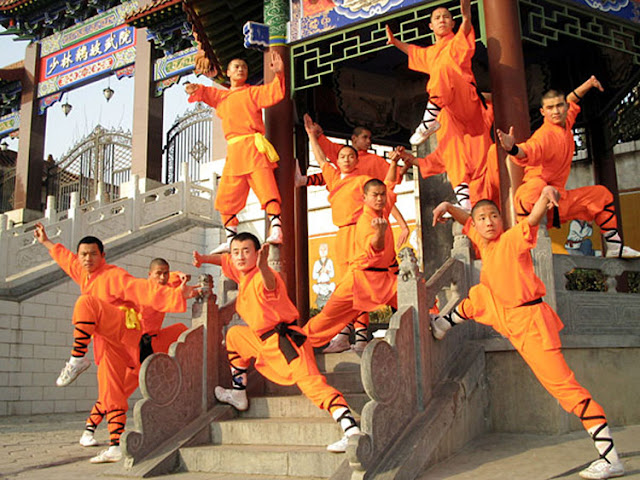
Kung Fu martial arts, also referred to by the Mandarin Chinese term wushu (simplified Chinese: 武术; traditional Chinese: 武術; pinyin: wǔshù) and popularly as kung fu (Chinese: 功夫; pinyin: gōngfu), are a number of fighting styles that have developed over the centuries in China. These fighting styles are often classified according to common traits, identified as "families" (家, jiā), "sects" (派, pài) or "schools" (門, mén) of martial arts. Examples of such traits include physical exercises involving animal mimicry, or training methods inspired by Chinese philosophies, religions and legends. Styles which focus on qi manipulation are labeled as internal (内家拳, nèijiāquán), while others concentrate on improving muscle and cardiovascular fitness and are labeled external (外家拳, wàijiāquán). Geographical association, as in northern (北拳, běiquán) and southern (南拳, nánquán), is another popular method of categorization.
History
The genesis of Chinese martial arts has been attributed to the need for self-defense, hunting techniques and military training in ancient China. Hand-to-hand combat and weapons practice were important in training ancient Chinese soldiers.
While it is clear that various forms of martial arts have been practiced in China since antiquity, very little detail on specifics can be recovered for times predating the 16th century. By contrast, there is a variety of sources on the topic from the Qing period.
Detailed knowledge about the state and development of Chinese martial arts becomes available from the Nanjing decade (1928-1937), as the Central Guoshu Institute established by the Kuomintang regime made an effort to compile an encyclopedic survey of martial arts schools. Since the 1950s, the People's Republic of China has organized Chinese martial arts as an exhibition and full-contact sport under the heading of Wushu.
Legendary origins
According to legend, Chinese martial arts originated during the semi-mythical Xia Dynasty (夏朝) more than 4,000 years ago. It is said the Yellow Emperor Huangdi (legendary date of ascension 2698 BCE) introduced the earliest fighting systems to China. The Yellow Emperor is described as a famous general who, before becoming China’s leader, wrote lengthy treatises on medicine, astrology and the martial arts. One of his main opponents was Chi You (蚩尤) who was credited as the creator of jiao di, a forerunner to the modern art of Chinese Wrestling.
Early history
The earliest references to Chinese martial arts are found in the Spring and Autumn Annals (5th century BCE), where a hand to hand combat theory, including the integration of notions of "hard" and "soft" techniques, is mentioned. A combat wrestling system called juélì or jiǎolì (角力) is mentioned in the Classic of Rites (1st century BCE). This combat system included techniques such as strikes, throws, joint manipulation, and pressure point attacks. Jiao Di became a sport during the Qin Dynasty (221–207 BCE). The Han History Bibliographies record that, by the Former Han (206 BCE – 8 CE), there was a distinction between no-holds-barred weaponless fighting, which it calls shǒubó (手搏), for which "how-to" manuals had already been written, and sportive wrestling, then known as juélì or jiǎolì (角力). Wrestling is also documented in the Shǐ Jì, Records of the Grand Historian, written by Sima Qian (ca. 100 BCE).
In the Tang Dynasty, descriptions of sword dances were immortalized in poems by Li Bai. In the Song and Yuan dynasties, xiangpu contests were sponsored by the imperial courts. The modern concepts of wushu were fully developed by the Ming and Qing dynasties.
Philosophical influences
The ideas associated with Chinese martial arts changed with the evolution of Chinese society and over time acquired some philosophical bases: Passages in the Zhuangzi (庄子), a Daoist text, pertain to the psychology and practice of martial arts. Zhuangzi, its eponymous author, is believed to have lived in the 4th century BCE. The Tao Te Ching, often credited to Lao Zi, is another Daoist text that contains principles applicable to martial arts. According to one of the classic texts of Confucianism, Zhou Li (周禮/周礼), Archery and charioteering were part of the "six arts" (simplified Chinese: 六艺; traditional Chinese: 六藝; pinyin: liu yi, including rites, music, calligraphy and mathematics) of the Zhou Dynasty (1122–256 BCE). The Art of War (孫子兵法), written during the 6th century BCE by Sun Tzu (孫子), deals directly with military warfare but contains ideas that are used in the Chinese martial arts.
Daoist practitioners have been practicing Tao Yin, physical exercises similar to Qigong that was one of the progenitors to Tai Chi Chuan, from at least as early as 500 BCE. In 39–92 CE, "Six Chapters of Hand Fighting", were included in the Han Shu (history of the Former Han Dynasty) written by Pan Ku. Also, the noted physician, Hua Tuo, composed the "Five Animals Play"—tiger, deer, monkey, bear, and bird, around 220 BCE. Daoist philosophy and their approach to health and exercise have influenced the Chinese martial arts to a certain extent. Direct reference to Daoist concepts can be found in such styles as the "Eight Immortals" which uses fighting techniques that are attributed to the characteristics of each immortal.
Shaolin and temple-based martial arts
Shaolin Monastery
The Shaolin style of wushu is regarded as amongst the first institutionalized Chinese martial arts. The oldest evidence of Shaolin participation in combat is a stele from 728 CE that attests to two occasions: a defense of the Shaolin Monastery from bandits around 610 CE, and their subsequent role in the defeat of Wang Shichong at the Battle of Hulao in 621 CE. From the 8th to the 15th centuries, there are no extant documents that provide evidence of Shaolin participation in combat.
Between the 16th and 17th centuries there are at least forty sources which provide evidence that not only did the monks of Shaolin practice martial arts, but martial practice had become such an integral element of Shaolin monastic life that the monks felt the need to justify it by creating new Buddhist lore, the earliest appearance of the frequently cited legend concerns Bodhidharma's supposed foundation of Shaolin Kung Fu dates to this period. The origin of this legend has been traced to the Ming period's Yijin Jing or "Muscle Change Classic", a text written in 1624 attributed to Bodhidharma.
References of martial arts practice in Shaolin appear in various literary genres of the late Ming: the epitaphs of Shaolin warrior monks, martial-arts manuals, military encyclopedias, historical writings, travelogues, fiction and poetry. However these sources do not point out to any specific style originated in Shaolin. These sources, in contrast to those from the Tang period, refer to Shaolin methods of armed combat. This include a skill for which Shaolin monks had become famous—the staff (gùn, Cantonese gwan). The Ming General Qi Jiguang included description of Shaolin Quan Fa (Pinyin romanization: Shào Lín Quán Fǎ or Wade-Giles romanization Shao Lin Ch'üan Fa, 少 林 拳 法 "fist principles"; Japanese pronunciation: Shorin Kempo or Kenpo) and staff techniques in his book, Ji Xiao Xin Shu (紀效新書), which can be translated as "New Book Recording Effective Techniques". When this book spread to East Asia, it had a great influence on the development of martial arts in regions such as Okinawa and Korea.
Styles
China has a long history of martial traditions that includes hundreds of different styles. Over the past two thousand years many distinctive styles have been developed, each with its own set of techniques and ideas. There are also common themes to the different styles, which are often classified by "families" (家, jiā), "sects" (派, pai) or "schools" (門, men). There are styles that mimic movements from animals and others that gather inspiration from various Chinese philosophies, myths and legends. Some styles put most of their focus into the harnessing of qi, while others concentrate on competition.
Chinese martial arts can be split into various categories to differentiate them: For example, external (外家拳) and internal (内家拳). Chinese martial arts can also be categorized by location, as in northern (北拳) and southern (南拳) as well, referring to what part of China the styles originated from, separated by the Yangtze River (Chang Jiang); Chinese martial arts may even be classified according to their province or city. The main perceived difference between northern and southern styles is that the northern styles tend to emphasize fast and powerful kicks, high jumps and generally fluid and rapid movement, while the southern styles focus more on strong arm and hand techniques, and stable, immovable stances and fast footwork. Examples of the northern styles include changquan and xingyiquan. Examples of the southern styles include Bak Mei, Wuzuquan, Choy Li Fut and Wing Chun. Chinese martial arts can also be divided according to religion, imitative-styles (象形拳), and family styles such as Hung Gar (洪家). There are distinctive differences in the training between different groups of the Chinese martial arts regardless of the type of classification. However, few experienced martial artists make a clear distinction between internal and external styles, or subscribe to the idea of northern systems being predominantly kick-based and southern systems relying more heavily on upper-body techniques. Most styles contain both hard and soft elements, regardless of their internal nomenclature. Analyzing the difference in accordance with yin and yang principles, philosophers would assert that the absence of either one would render the practitioner's skills unbalanced or deficient, as yin and yang alone are each only half of a whole. If such differences did once exist, they have since been blurred.
Training
Chinese martial arts training consists of the following components: basics, forms, applications and weapons; different styles place varying emphasis on each component. In addition, philosophy, ethics and even medical practice are highly regarded by most Chinese martial arts. A complete training system should also provide insight into Chinese attitudes and culture.
Basics
The Basics (基本功) are a vital part of any martial training, as a student cannot progress to the more advanced stages without them; Basics are usually made up of rudimentary techniques, conditioning exercises, including stances. Basic training may involve simple movements that are performed repeatedly; other examples of basic training are stretching, meditation, striking, throwing, or jumping. Without strong and flexible muscles, management of Qi or breath, and proper body mechanics, it is impossible for a student to progress in the Chinese martial arts. A common saying concerning basic training in Chinese martial arts is as follows:
内外相合,外重手眼身法步,内修心神意氣力。
Which can be translated as:
Train both Internal and External.
External training includes the hands, the eyes, the body and stances. Internal training includes the heart, the spirit, the mind, breathing and strength.
Stances
Stances (steps or 步法) are structural postures employed in Chinese martial arts training. They represent the foundation and the form of a fighter's base. Each style has different names and variations for each stance. Stances may be differentiated by foot position, weight distribution, body alignment, etc. Stance training can be practiced statically, the goal of which is to maintain the structure of the stance through a set time period, or dynamically, in which case a series of movements is performed repeatedly. The horse-riding stance (骑马步/马步 qí mǎ bù/mǎ bù) and the bow stance are examples of stances found in many styles of Chinese martial arts.
Meditation
In many Chinese martial arts, meditation is considered to be an important component of basic training. Meditation can be used to develop focus, mental clarity and can act as a basis for qigong training.
Use of qi
The concept of qi or ch'i (氣/气) is encountered in a number of Chinese martial arts. Qi is variously defined as an inner energy or "life force" that is said to animate living beings; as a term for proper skeletal alignment and efficient use of musculature (sometimes also known as fa jin or jin); or as a shorthand for concepts that the martial arts student might not yet be ready to understand in full. These meanings are not necessarily mutually exclusive.The existence of qi as a measurable form of energy as discussed in traditional Chinese medicine has no basis in the scientific understanding of physics, medicine, biology or human physiology.
There are many ideas regarding the control of one's qi energy to such an extent that it can be used for healing oneself or others: the goal of medical qigong. Some styles believe in focusing qi into a single point when attacking and aim at specific areas of the human body. Such techniques are known as dim mak and have principles that are similar to acupressure.
Weapons training
Most Chinese styles also make use of training in the broad arsenal of Chinese weapons for conditioning the body as well as coordination and strategy drills.Weapons training (qìxiè 器械) are generally carried out after the student is proficient in the basics, forms and applications training. The basic theory for weapons training is to consider the weapon as an extension of the body. It has the same requirements for footwork and body coordination as the basics. The process of weapon training proceeds with forms, forms with partners and then applications. Most systems have training methods for each of the Eighteen Arms of Wushu (shíbābānbīngqì 十八般兵器) in addition to specialized instruments specific to the system.
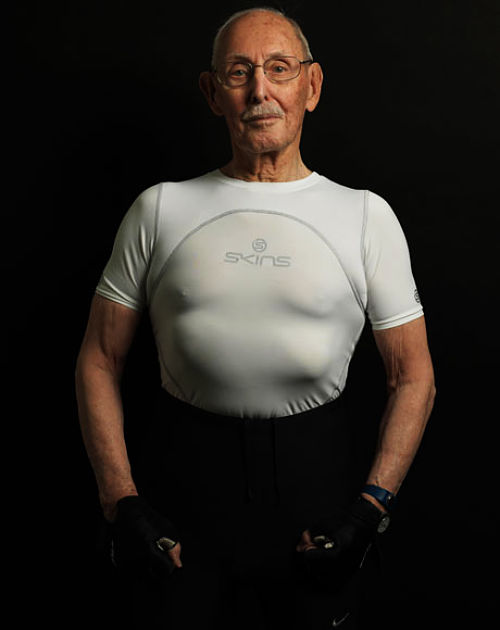
Experience: I Am A 91 Year Old Bodybuilder | Life And Style
At 85 I had a crisis. I looked at myself in the mirror, and saw an old man. I was overweight, my posture was terrible and there was skin hanging off me. I looked like a wreck'
My personal trainer and I are always getting into arguments about what part of my body needs the most work. I'm not happy with my abs – I have the remains of a small spare tyre – but she says my bottom is a catastrophe because it's so flat. What we both agree on is that bodies can be remodelled, no matter how old you are.
I was a very sickly child. From the age of six I had constant headaches and chronic tonsilitis. I became pale, sluggish and my growth was slow. I remember noticing one day that my best friend, who was a year younger than me, was slightly taller and that I was very upset about it.
At 13, I had my tonsils removed and as my health improved, everything changed. I shot up and suddenly I was full of energy. I thought back to myself as a frail, sickly boy, and vowed never to be like that again. I took up boxing, rowing and rugby. Staying fit and strong became my priority.
After school I trained to be a dentist, but sport remained an important hobby. I only once let myself go. As I crept into my 40s, I adopted my wife's sedentary lifestyle. We spent a lot of time doing nothing. Inevitably, my blood pressure plummeted and one day I felt a sharp pain in my legs – only to discover the dark, earthworm-like patterns of varicose veins across my calves. It was my first brush with old age, and I didn't like it. Immediately I resumed rowing to stay fit.
Life went on. My wife and I divorced. At 60, I discovered veteran's rowing and started competing internationally, eventually winning 36 gold medals. I'm not a particularly talented sportsman, but I've always been a great trier. At 75, many of my friends began to pass away. People were getting older around me, but I was only just ready to retire. I carried on rowing and publishing a dentistry newsletter until I was 82.
Then at 85 I had a crisis. I looked at myself in the mirror one day, and saw an old man. I was overweight, my posture was terrible and there was skin hanging off me where muscle used to be. I looked like a wreck. I started to consider the fact that I was probably going to die soon. I knew I was supposed to slow down, but I'm vain. I missed my old body and wanted to be able to strut across the beach, turning heads.
I was already rowing six times a week, and there didn't seem any harm in pushing myself a bit harder to rebuild my muscles. So in my late-80s I joined a bodybuilding club.
There's no research into bodybuilding for the over-80s, so it's been an experiment. With weight-lifting and protein shakes, my body began to change. It became broader, more v-shaped, and my shoulders and biceps became more defined. People began to comment on how much younger I looked, and my new muscular frame drew a lot of admiring glances from women.
Everything I learned was tailored to help my body cope with old age. I took up judo to teach me how to fall properly. My circulation and posture improved, and I was told that there was a chance more muscle mass could protect my brain from Alzheimer's. I stopped thinking about dying. As I approached 90, my focus was on getting my body back.
In 2008, I signed up for my first championship. I was nervous, but although I was the oldest contestant by around 20 years, everyone was very welcoming. I got higher scores than all the women taking part, and a lot of the men. Then, at last year's event in Germany, I triumphed, scoring higher than any contestant in any age category for my 57 dips, 61 chin-ups, 50 push-ups and 48 abdominal crunches, each in 45 seconds. As I'm over 70, they did make allowances – I could do the push-ups on my knees, for example – but I proved I wasn't past it.
I'm not chasing youthfulness. I'm chasing health. People have been brainwashed to think that after you're 65, you're finished. We're told that old age is a continuous state of decline, and that we should stop working, slow down and prepare to die. I disagree. To me, a 65-year-old is young. I turn 92 this year. It is a frightening prospect – the law of averages is against me, and, yes, one day something will happen and that will be it. But until that day comes, I'm going to carry on working on my abs.
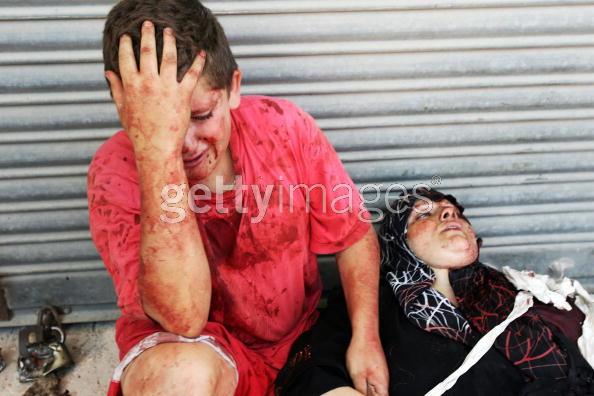
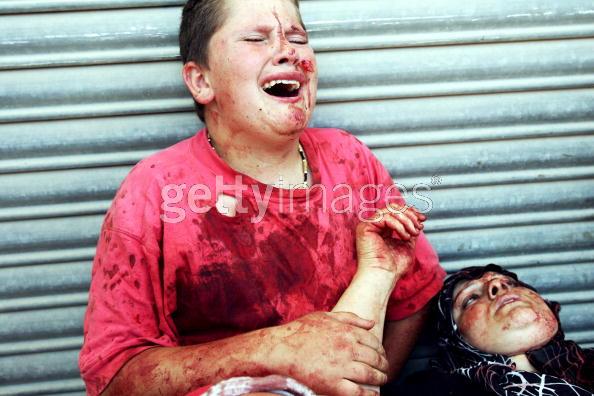
we cant open the eyes of OIC, but we can forward these to as many as possible, these images are quite enough to get our eyes turn teary. this is such a painful occassion for muslims.