Thursday, November 22, 2018

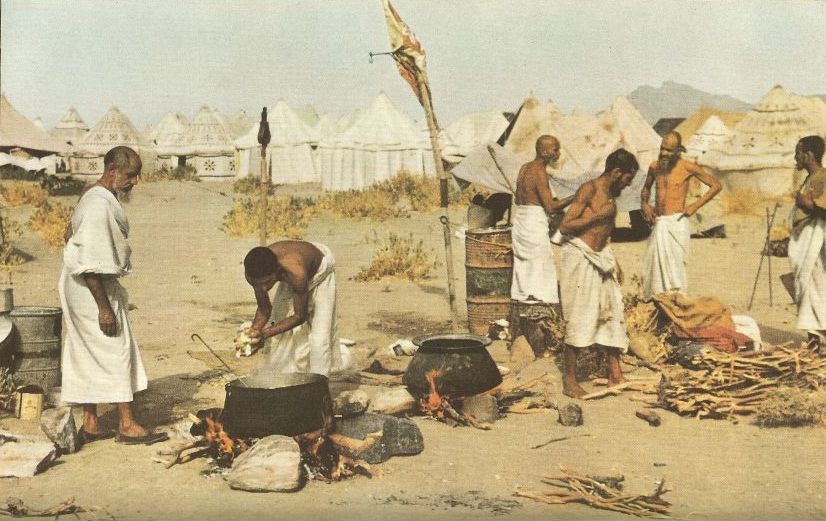
Hajj Pilgrimage in 1953 - Rare Old Pictures


The pilgrimage is associated with the life of Muhammad, but the ritual of the Hajj itself was considered ancient even during his lifetime in the 7th century. Many Muslims believe that it goes back to the time of Abraham in 2000 BC. Pilgrims would join processions of tens of thousands of people, who would simultaneously converge on Mecca for the week of the Hajj, and perform a series of rituals. Each person would walk counter-clockwise seven times about the Kaaba, the cubical building towards which all Muslims pray, kiss the sacred Black Stone on its corner, run back and forth between the hills of Al-Safa and Al-Marwah, drink from the Zamzam Well, go to the plains of Mount Arafat to stand in vigil, then proceed to Muzdalifah to gather pebbles, which they would throw at a rock in Mina to perform the ritual of the Stoning of the Devil. The pilgrims would then shave their heads, perform an animal sacrifice, and celebrate the three day global festival of Eid ul-Adha. via:wikipedia


Most Poisonous Animals In The World

It is really hard to tell which animal is the most poisonous in the world. The one that has the most toxic chemicals? The one that kills the biggest amount of people a year? Or maybe the one with the biggest amount of poison?

First of all, I have to admit that the title is a bit incorrect, because there is a difference between poisonous and venomous animals. A poisonous animal carries harmful chemicals called toxins primarily used for self defense. Therefore venomous animals deliver their toxins by stinging, stabbing, or biting. So poisonous animals are passive killers, while venomous animals are active killers.

Nevertheless, theory aside, they are all really dangerous. So look really closely at each photo, cause next time you meet them can be the last thing you ever see.

1. Box Jellyfish


The top prize for “The World Most Venomous Animal,” would go to the Box Jellyfish. It has caused at least 5,567 recorded deaths since 1954. Their venom is among the most deadly in the world. It’s toxins attack the heart, nervous system, and skin cells. And the worst part of it is that jelly box venom is so overpoweringly painful, that human victims go in shock, drown or die of heart failure before even reaching shore. Survivors experience pain weeks after the contact with box jellies.

You have virtually no chance to survive the venomous sting, unless treated immediately. After a sting, vinegar should be applied for a minimum of 30 seconds. Vinegar has acetic acid, which disables the box jelly’s nematocysts that have not yet discharged into the bloodstream (though it will not alleviate the pain). Wearing panty hose while swimming is also a good prevention measure since it can prevent jellies from being able to harm your legs.

Jelly box can be found in the waters around Asia and Australia.

2. King Cobra


The King Cobra (Ophiophagus hannah) is the world’s longest venomous snake – growing up to 5.6 m (18.5 ft) in length. Ophiophagus, literally means “snake-eater” as it eats other snakes. One single bite of this deadly snake can easily kill a human. This snake is even capable of killing a full-grown Asian Elephant within 3 hours if the larger animal is bitten in a vulnerable area such as the trunk.

It’s venom is not as toxic as other venomous snakes, but King Cobra is capable of injecting 5 times more venom than black mamba and can result in mortality up to 5 times faster than that of the black mamba. It is quite widespread, ranging across South and South-east Asia, living in dense highland forests.


3. Marbled Cone Snail


This little beautiful looking Marbled Cone snail can be as deadly as any other animal on this list. One drop of its venom is so powerful that it can kill more than 20 humans. If you ever happen to be in warm salt water environment (where these snails are often found) and see it, don’t even think of picking it up. Of course, the true purpose of its venom is to catch its prey.

Symptoms of a cone snail sting can start immediately or can be delayed in onset for days. It results in intense pain, swelling, numbness and tingling. Severe cases involve muscle paralysis, vision changes and breathing failure. There is no antivenom. However, only about 30 human deaths have been recorded from cone snail envenomation.


4. Blue-Ringed Octopus

The Blue-Ringed Octopus is very small, only the size of a golf ball, but its venom is so powerful that can kill a human. Actually it carries enough poison to kill 26 adult humans within minutes, and there is no antidote. They are currently recognized as one of the world’s most venomous animals.

Its painless bite may seem harmless, but the deadly neurotoxins begin working immediately resulting in muscular weakness, numbness, followed by a cessation and breathing and ultimately death.

They can be found in tide pools in the Pacific Ocean, from Japan to Australia.


5. Death Stalker Scorpion


Contrarily to the popular belief most of the scorpions are relatively harmless to humans as stings produce only local effects (pain, numbness or swelling). However, the Death Starker Scorpion is highly dangerous species because its venom is a powerful cocktail of neurotoxins which causes an intense and unbearable pain, then fever, followed by coma, convulsions, paralysis and death. Fortunately, while a sting from this scorpion is extremely painful, it would be unlikely to kill a healthy, adult human. Young children, the old, or infirm (with a heart condition) are at the biggest risk.

Death stalker scorpions are spread in North Africa and Middle East.


6. Stonefish


Maybe Stonefish would never win a beauty contest, but it would definitely win the top prize for being “The World Most Venomous Fish”. Its venom causes such a severe pain that the victims of its sting want the affected limb to be amputated. It is described as the worst pain known to man. It is accompanied with possible shock, paralysis, and tissue death. If not given medical attention within a couple of hours It can be fatal to humans.

Stonefish stores its toxins in gruesome-looking spines that are designed to hurt would-be predators.

Stonefish mostly live above the tropic of Capricorn, often found in the shallow tropical marine waters of the Pacific and Indian oceans, ranging from the Red Sea to the Queensland Great Barrier Reef.


7. The Brazilian wandering spider


The Brazilian Wandering Spider (Phoneutria) or banana spider appears in the Guinness Book of World Records 2007 for the most venomous spider and is the spider responsible for most human deaths.

This spider is believed to have the most potent neurotoxic venom of any living spider. Only 0.006mg (0.00000021oz) is sufficient to kill a mouse. They are also so dangerous because of their wandering nature. They often hide during daytime in highly populated areas inside houses, clothes, boots, and cars.

Its venomous bite causes not only intense pain, the venom of the spider can also cause priapism – uncomfortable erections lasting for many hours that lead to impotence.


8. Inland Taipan


The prize for “The World’s Most Venomous Snake” goes to the Inland Taipan of Australia. Just a single bite from this snake contains enough venom to kill 100 human adults or an army of 250,000 mice. Its venom is at least 200 – 400 times more toxic than a common cobra. The Inland Taiwan’s extremely neurotoxic venom can kill an adult human in as little as 45 minutes. Fortunately this snake is very shy and there have been no documented human fatalities (all known bites were treated with antivenin).


9. Poison Dart Frog


If you ever happen to be running through the rain forests somewhere in Central or South America, do not ever pick up beautiful and colorful frogs – it can be the Poison Dart Frog. This frog is probably the most poisonous animal on earth.The 2 inch long (5cm) golden poison dart frog has enough venom to kill 10 adult humans or 20,000 mice. Only 2 micrograms of this lethal toxin (the amount that fits on the head of a pin) is capable of killing a human or other large mammal. They are called “dart frogs” because indigenous Amerindians’ use of their toxic secretions to poison the tips of their blow-darts. Poison dart frogs keep their poison in their skins and will sicken or kill anybody who touches or eats it.


10. Puffer Fish


Puffer Fish are the second most poisonous vertebrate on earth (the first one is golden dart Frog). The meat of some species is a delicacy in both Japan (as fugu) and Korea (as bok-uh) but the problem is that the skin and certain organs of many puffer fish are very poisonous to humans.

This puffy fish produce rapid and violent death..Puffer’s poisoning causes deadening of the tongue and lips, dizziness, vomiting, rapid heart rate, difficulty breathing, and muscle paralysis. Victims die from suffocation as diaphragm muscles are paralyzed. Most of the victims die after four to 24 hours. There is no known antidote, Most deaths from fugu happen when untrained people catch and prepare the fish.

Statistics show that there were 20 to 44 incidents of fugu poisoning per year between 1996 and 2006 in all of Japan and up to six incidents per year led to death. Since Fugu’s poison can cause near instantaneous death, only licensed chefs are allowed to prepare it.

Vodka Eyeballing

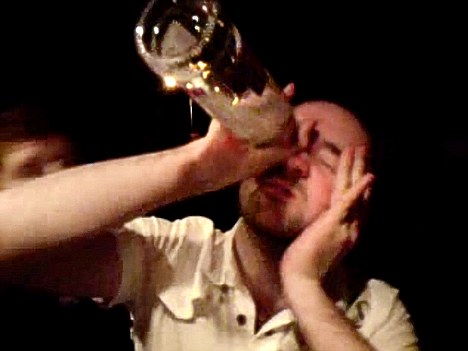
'Vodka eyeballing', as it is known in student circles, is the latest drinking craze to sweep through Britain's universities.

Those who do it claim that it induces feelings of drunkenness at break-neck speeds, providing an instant high.

But the devastating long-term damage it causes is becoming a major concern among doctors and university authorities who already worry that Britain's student drinking culture is out of control.
Vodka Eyeballing
Vodka Eyeballing : Doing Vodka Shots Through Your Eyes


Melissa, who left university last summer and is now 22, believes they are right to be worried. Her constantly watering left eye has been left permanently scarred by her antics. More worryingly still, she has been warned that her eyesight may deteriorate further as she gets older.

'I'm in constant pain because of what I did,' she says. 'And I'm terrified that it will get worse. I wish I could turn the clock back and change things. But I can't.'

It would be easy, of course, to dismiss Melissa as nothing more than a silly 'ladette'. But it is hard to reconcile that stereotype with the young woman she is today, fresh out of university in London with a first-class English degree, the privately-educated daughter of financiers, and an aspiring writer.

In short she is not the kind of young woman who might naturally be associated with Britain's spiralling binge-drinking youth culture.

The question is then, why would an intelligent, seemingly sensible woman do something so foolhardy and so grotesque as 'vodka eyeballing'. And what can be learnt from her story?

It is a question she wrestles with every day.
Vodka Eyeballing
Crazy Drinking Habits: Vodka Eyeballing


'I know people will say that their son or daughter wouldn't do anything so stupid, but really I don't think parents have any idea what goes on at university and what pressures their children will come under to do stupid things,' says Melissa, who shares a flat with friends in South London.

'The student drinking culture has got completely out of hand and I know because I saw it. I regarded myself as a normal, sensible teenager, but I got pulled into it myself.'

She hasn't yet told her parents about her eye. 'I've put off telling them about it before now because I didn't want to worry them,' she says simply, but it's not hard to imagine how distressed they will be. Leaving home for the first time and going to university plunged Melissa into a world of almost unchecked social high-jinks.
Vodka Eyeballing
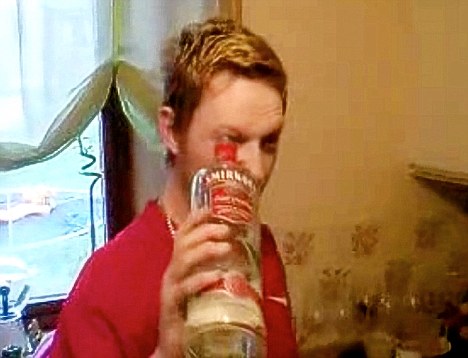
vodka eyeballing craze that started in the U.S. and has now spread to the university party scene in Britain


'Being at university is like being in a bubble,' she claims. 'You live for the moment. It's very carefree. You want to try new things and don't think about what will happen afterwards.'

Looking back, she can see how she put common sense to one side as she tried to fit in with the other students.

The social environment at university was, she says, 'bawdy and competitive'. For those who did sports, it was even more so.

When she joined the netball team, she had no idea that her drinking skills off the court would be as scrutinised as her agility on it. Overnight, she found herself swiftly drawn into the university drinking culture.
Vodka Eyeballing
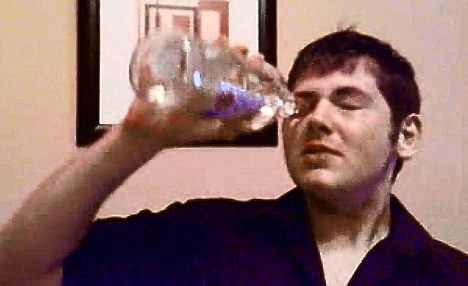
Young people 'drinking' neat vodka alcohol Shot in eyes to get drunk


Vodka Eyeballing
Vodka eyeball shots a dangerous way to imbibe Pictures


'It's especially difficult if you do sports because the element of competition you see in your game is transferred to the bar,' she says. 'I felt very pressured at the beginning. When we were travelling back from a game on the coach, there was a tradition whereby you had to down lots of port.'

The weekly 'Athletics Union' nights held in the Students' Union bar were even more depraved.

'The rugby players were the worst,' she says. 'But because of feminism, you're expected, as a woman, to keep up with them. The guys set a precedent and you have to follow. That's what drives the whole ladette culture. Women believing they have to be equal in every single way.'

What made matters worse for Melissa was that, by her own admission, she has always been highly competitive. It is a trait that in other areas of her life, her schooling, exams, has served her well.

Under the influence of alcohol, it was disastrous. Challenged to undergo a 'vodka eyeball', she was determined to impress her friends.

'Vodka eyeballing' is believed to have emerged as a dangerous trend in the U.S., where it is a popular nightclub trick performed by waitresses for tips in resorts such as Las Vegas.

Critics have also blamed the 2000 film Kevin And Perry Go Large, starring Harry Enfield as 'Kevin the Teenager', for encouraging the practice. In the film, actor Rhys Ifans plays a character called DJ Eyeball Paul, who performs the stunt in nightclubs.

While medical experts say it is still a relatively new phenomenon, a quick glance at the internet reveals how rife it has become among young drinkers in Britain.

The website YouTube, for example, features more than 800 clips of young men and women pouring vodka into their eyes - usually in their own homes. And these are just the ones stupid enough to film themselves and post their clips online.

Another woman I spoke to this week recalled seeing her former boss, a senior figure at a well-known advertising agency, 'drinking' vodka through his eye at an advertising party.

There are also pages on Facebook and other social networking sites set up by 'fans' of 'eyeballing', in which people seem to revel in the dramatic inebriation which seems to follow this dangerous practice.

In Scotland, concerns have been expressed by charities and campaign groups over a similar stunt using the highly alcoholic cinnamon-flavoured schnapps Aftershock instead of vodka.

Certainly, in recent years, ' eyeballing' has become a regular feature in university bars which are often run by students themselves and therefore difficult to police.

Melissa was partly reassured by the fact that many of her peers were doing it.

'I saw people I respected, intelligent students from normal, sensible backgrounds like me, behaving like this. I know it sounds stupid, but it made you feel it was OK. You felt that if other people were doing it with no serious side-effects, then somehow you were all right.

'I felt very buoyed up by everyone else. Your inhibitions have gone. It was exciting to push yourself.

'People will wonder why you'd do something so unpleasant to yourself, but it's almost a masochistic thing, a test of your endurance in front of your peers.' Not surprisingly, the pain was excruciating.

'It did sting. It was really painful. But bearing the pain is part of the competitiveness .'

Devotees claim that 'vodka eyeballing' induces drunkenness faster than drinking it can, because it passes easily through the mucous membrane and enters the bloodstream directly through veins at the back of the eye, although some experts are sceptical about the claims and believe that since those who do it are usually already drunk, they simply convince themselves that it's having such an effect.

Professor Robin Touquet, consultant in emergency medicine at St Mary's Hospital, Paddington, says: 'At 40 per cent pure ethanol, vodka in the eye would create inflammation and thrombosis - clotting of the blood vessels - such that very little alcohol would be absorbed. Unlike the stomach, the eye does not have a gastro-intestinal lining to protect it and aid absorption.

'I am absolutely horrified that someone would even think of putting vodka in their eye. It's self-abuse.

'In the past, vodka has been used as a disinfectant. At 40 per cent proof, imagine what it can do to an area as sensitive as the eye? It is highly toxic.

'Poured into the eye over a period of time, it could cause serious damage to both the cornea and the sclera, the white of the eye.'

Not surprisingly then, the following morning after her first 'vodka eyeball', Melissa's eye was severely bloodshot and sore.

'The pain went on for a long time, but I thought it was partly due to my hangover.' Nevertheless, she underwent the process again and again. In the weeks that followed, it became her party trick.

'I was very competitive,' she admits. 'Some people might do it once or twice - I did it quite a lot. I don't think I did more than three shots in a night, but I've got so much alcohol-related amnesia that I have completely blank periods of memory.'

On one level, of course, it is hard to comprehend how an intelligent young woman could be so irresponsible. But what is clear too is that Melissa's story is by no means unique.

'Vodka eyeballing was quite mainstream really,' she says. 'It went on all the time. Men and women were doing it. It was mostly the men, but the more competitive girls were trying to keep up with them. There was a sense that it was harmless fun. And although it was going on in the students' union bar, it was mostly run by students.'

It took only a month for Melissa to realise that she had damaged her eye. 'It got more and more sore and bloodshot,' she says. 'It was as if I had conjunctivitis all the time. It was sore and weepy, very sensitive. I was really frightened.'

Not surprisingly, her doctor was stunned when she went to see him. Melissa, who previously had perfect eyesight, was referred to an ophthalmologist, who told her that she had permanent scarring on the cornea of her left eye.

'She'd heard about vodka eyeballing going on in America, but she'd never seen a case in Britain,' says Melissa.

'She said vodka was so corrosive that it had literally seared its way through the cornea. But there was nothing she could do. You can't repair the cornea. I've been told it could lead to complications and can cause blindness, which is terrifying.

'At the moment, my vision is blurred in that eye, but that's because it's watering all the time. It's really sore and weepy. I've got used to the pain now. I just have to bear it. I don't think people can tell looking at me, but it is more bloodshot than the other one. It's never a clear white colour. It's hard to wear eye make-up because if anything goes in it, it's really painful and starts watering.'

Alarmingly, some of her friends have also suffered after-effects.

'I've told them to seek medical help, but they're too scared,' she says. Melissa is speaking out now because she wants to warn other students of the dangers and the pressures of the university drinking culture.

'The damage I've done to my eye is irrevocable. It's like someone damaging their liver. I really do want to get the message across,' she says.

She still drinks alcohol although never vodka, but keeps within the recommended NHS limits.

'I can't bear not feeling in control now,' she says. 'I hate the fact that there are nights out, periods of time that I simply can't remember.'

But there are also things that she can't forget.

And while most people are able to put their youthful misdemeanours behind them, Melissa is reminded of hers every day, with every blink of her eye.

Tuesday, October 30, 2018

Salar de Uyuni | Salt Hotel In Bolivia - Unusual & Unique Hotels Of The World

At first glance, you could be forgiven for mistaking these images for a beach house, with the floors dusted in a layer of sand and walls made from stone.

But in fact everything in this incredible South American hotel is made from salt - including most of the furniture.

The Hotel de Sal, near Colchani, Bolivia, hosts guests who have come to visit the stunning salt flats where vast expanses of salt lakes give the surreal impression of the earth meeting the sky.

Salar de Uyuni | Salt Hotel In Bolivia

Tourists typically stay for a few days to see the natural wonders of Bolivia's most notorious attraction before moving on to the next stop of their journey.

For £84 a night, lodgers can rent a double room - complete with their own salt bed of course - and breakfast.

Tour guide Pedro Pablo Michel Rocha, of Hidalgo Tours, works with the hotel to provide trips in the south of the country.

He said: 'I love it when visitors come to this place for the first time.

'They can't get over the fact that everything is made out of salt and I've even seen a few people lick the furniture to make sure!

Salar de Uyuni | Salt Hotel In Bolivia
Salt Hotel

Salar de Uyuni | Salt Hotel In Bolivia
Luxury Accommodation Hotel In Bolivia

'It is a wonderful experience to come somewhere like this where they've used the natural materials available to create something like a hotel.'

The infamous salt flats in Salar de Uyuni were formed as a result of transformations between several prehistoric lakes.

The plains are covered by a few feet of salt crust which has an unusual flatness and covers a pool of brine which is exceptionally rich in lithium.
Salar de Uyuni | Salt Hotel In Bolivia
Unusual & Unique Hotels Of The World

Although tourists have long been visiting the area, it wasn't until around five years ago that interest grew in extracting the 5.4m tons of lithium which is found just below the surface of the salt.

The lithium in the area makes up half the world's supply and is used in batteries for mobile phones and computers, as well as being a key element in electric cars.

Friday, October 5, 2018

Frog Juice In Peruvian

Frog Juice
Frog Juice

Peru has been selling fresh frog juice for the last 15 years, and some locals drink it every day because they say it gives them strength.

There’s nothing like a glass of fresh juice in the morning, right? Peruvian restaurant owner Carmen Gonzales would agree with this 100%, only she has a different kind of juice in mind – frog juice, For the last 15 years she and various other juice stand owners have been serving her Jugo de Rana to locals and tourists brave enough to try it, and business is better than ever. She sells about 80 frog-based drinks every day, and some of her clients have them as breakfast drinks, early in the morning, because it gives them energy for the entire day.

The frogs, which come from the famous Lake Titicaca, located at a high elevation in southern Peru, are taken out of a small aquarium, killed by banging them against tiles, skinned and dropped into a blender along with 20 other ingredients including white bean broth, honey, raw aloe vera, malt, maca (an Andean root also believed to boost stamina and sex drive) and sometimes even wine. This so-called “Peruvian Viagra” costs around $2, but fans of the drink say it’s worth every penny for its tonic effect on the human body.

Sunday, September 23, 2018

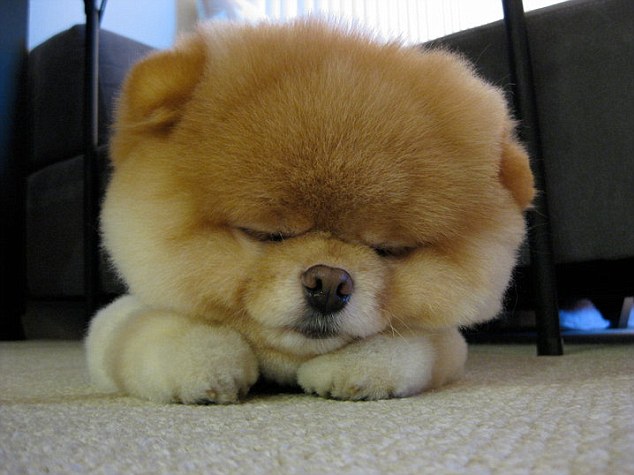
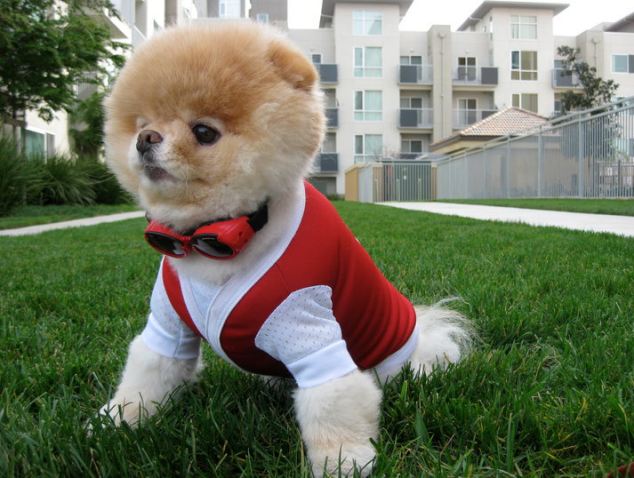
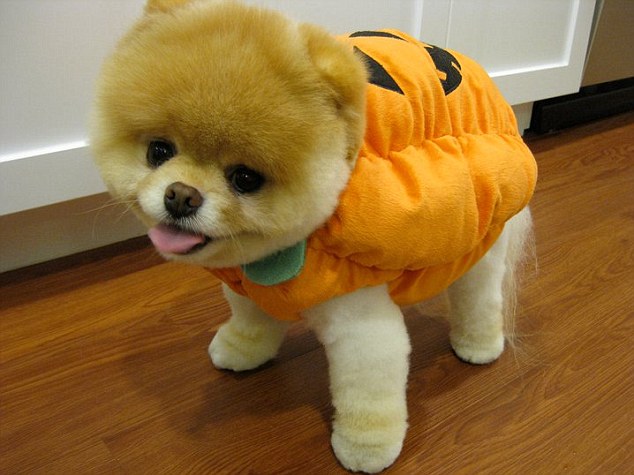
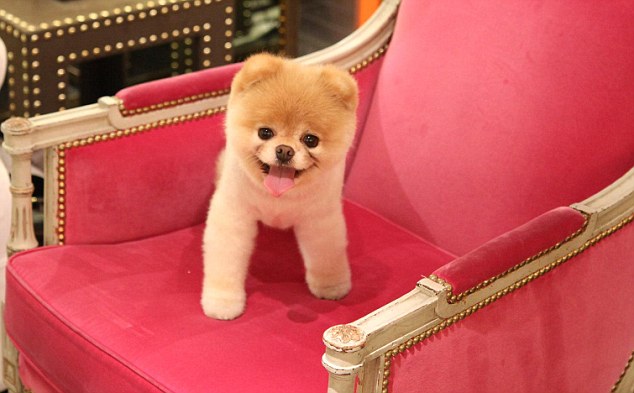
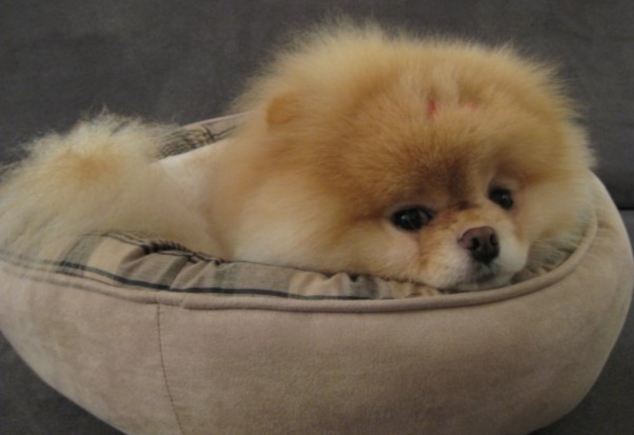
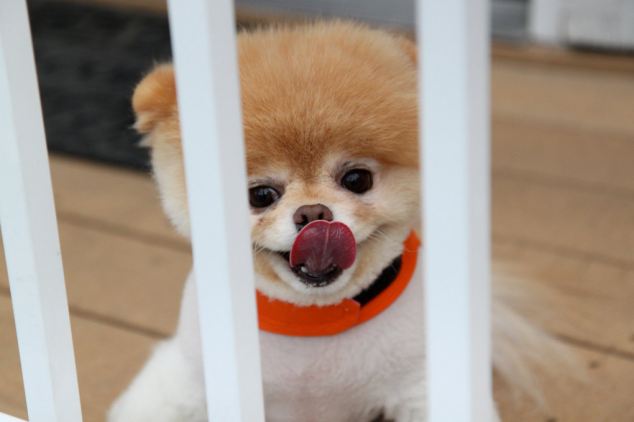
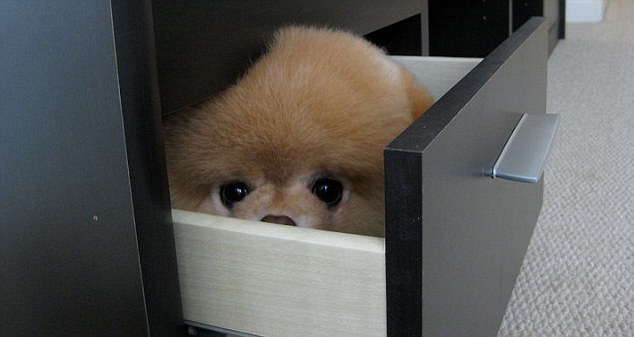
Boo Dog - Cutest Dog In The World

Boo Dog - Cutest Dog In The World

Boo Dog - He has nearly two million fans in Facebook and a book deal. But Boo isn't a reality TV star, actor or a pop singer - he's a pet dog.

The five-year-old Pomeranian has the fame most celebrities dream of after amassing 1.79million fans on social networking site Facebook.

And Boo is also a hit with the ladies. He attracted the attention of Hollywood stars including Khloe Kardashian, who posted a picture of the dog on her blog last year and singer Ke$ha, who Tweeted that Boo was 'her new boyfriend.'

Since then, Boo's Facebook page, launched in 2009, has gone viral, receiving thousands of new fans a day.

His owner, who has concealed her identity and location in the U.S. and uses the pseudonym J.H Lee told Time:'My friends loved looking at pictures of him.

'We started the first Facebook page as a joke.'

Boo shot to fame when he realised the key to looking so good in photographs is a great haircut.

The canine's unique look is down to an happy accident - his long hair was so knotted, it had to be shaved off.

Lee said: 'The groomer said they wouldn't even be able to get a brush through him.

'I was really upset when I heard that. But when I picked him up, I found he was actually really cute that way.'

Boo has been busy promoting his new book, a collection of photographs entitled 'Boo, the life of the world's cutest dog.'

The £8.99 book features exclusive photographs of Boo 'doing all his favorite things, lounging around, playing with friends, exploring the whole wide world, and making those famous puppy-dog eyes.'

And judging by his success so far, it's sure to be a bestseller.

Boo Dog - Cutest Dog In The World


Boo Dog - Cutest Dog In The World


Boo Dog - Cutest Dog In The World


Boo Dog - Cutest Dog In The World


Boo Dog - Cutest Dog In The World


Boo Dog - Cutest Dog In The World


Boo Dog - Cutest Dog In The World


Boo Dog - Cutest Dog In The World

Wednesday, September 5, 2018

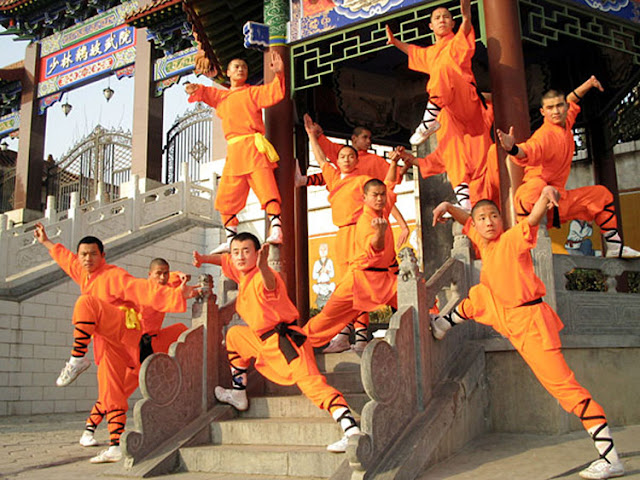
Shaolin Kung Fu Fighting | Martial Arts 2011

Kung Fu
Kung Fu | Martial Arts

Kung Fu martial arts, also referred to by the Mandarin Chinese term wushu (simplified Chinese: 武术; traditional Chinese: 武術; pinyin: wǔshù) and popularly as kung fu (Chinese: 功夫; pinyin: gōngfu), are a number of fighting styles that have developed over the centuries in China. These fighting styles are often classified according to common traits, identified as "families" (家, jiā), "sects" (派, pài) or "schools" (門, mén) of martial arts. Examples of such traits include physical exercises involving animal mimicry, or training methods inspired by Chinese philosophies, religions and legends. Styles which focus on qi manipulation are labeled as internal (内家拳, nèijiāquán), while others concentrate on improving muscle and cardiovascular fitness and are labeled external (外家拳, wàijiāquán). Geographical association, as in northern (北拳, běiquán) and southern (南拳, nánquán), is another popular method of categorization.

History

The genesis of Chinese martial arts has been attributed to the need for self-defense, hunting techniques and military training in ancient China. Hand-to-hand combat and weapons practice were important in training ancient Chinese soldiers.

While it is clear that various forms of martial arts have been practiced in China since antiquity, very little detail on specifics can be recovered for times predating the 16th century. By contrast, there is a variety of sources on the topic from the Qing period.

Detailed knowledge about the state and development of Chinese martial arts becomes available from the Nanjing decade (1928-1937), as the Central Guoshu Institute established by the Kuomintang regime made an effort to compile an encyclopedic survey of martial arts schools. Since the 1950s, the People's Republic of China has organized Chinese martial arts as an exhibition and full-contact sport under the heading of Wushu.

Legendary origins

According to legend, Chinese martial arts originated during the semi-mythical Xia Dynasty (夏朝) more than 4,000 years ago. It is said the Yellow Emperor Huangdi (legendary date of ascension 2698 BCE) introduced the earliest fighting systems to China. The Yellow Emperor is described as a famous general who, before becoming China’s leader, wrote lengthy treatises on medicine, astrology and the martial arts. One of his main opponents was Chi You (蚩尤) who was credited as the creator of jiao di, a forerunner to the modern art of Chinese Wrestling.

Early history

The earliest references to Chinese martial arts are found in the Spring and Autumn Annals (5th century BCE), where a hand to hand combat theory, including the integration of notions of "hard" and "soft" techniques, is mentioned. A combat wrestling system called juélì or jiǎolì (角力) is mentioned in the Classic of Rites (1st century BCE). This combat system included techniques such as strikes, throws, joint manipulation, and pressure point attacks. Jiao Di became a sport during the Qin Dynasty (221–207 BCE). The Han History Bibliographies record that, by the Former Han (206 BCE – 8 CE), there was a distinction between no-holds-barred weaponless fighting, which it calls shǒubó (手搏), for which "how-to" manuals had already been written, and sportive wrestling, then known as juélì or jiǎolì (角力). Wrestling is also documented in the Shǐ Jì, Records of the Grand Historian, written by Sima Qian (ca. 100 BCE).

In the Tang Dynasty, descriptions of sword dances were immortalized in poems by Li Bai. In the Song and Yuan dynasties, xiangpu contests were sponsored by the imperial courts. The modern concepts of wushu were fully developed by the Ming and Qing dynasties.

Philosophical influences

The ideas associated with Chinese martial arts changed with the evolution of Chinese society and over time acquired some philosophical bases: Passages in the Zhuangzi (庄子), a Daoist text, pertain to the psychology and practice of martial arts. Zhuangzi, its eponymous author, is believed to have lived in the 4th century BCE. The Tao Te Ching, often credited to Lao Zi, is another Daoist text that contains principles applicable to martial arts. According to one of the classic texts of Confucianism, Zhou Li (周禮/周礼), Archery and charioteering were part of the "six arts" (simplified Chinese: 六艺; traditional Chinese: 六藝; pinyin: liu yi, including rites, music, calligraphy and mathematics) of the Zhou Dynasty (1122–256 BCE). The Art of War (孫子兵法), written during the 6th century BCE by Sun Tzu (孫子), deals directly with military warfare but contains ideas that are used in the Chinese martial arts.

Daoist practitioners have been practicing Tao Yin, physical exercises similar to Qigong that was one of the progenitors to Tai Chi Chuan, from at least as early as 500 BCE. In 39–92 CE, "Six Chapters of Hand Fighting", were included in the Han Shu (history of the Former Han Dynasty) written by Pan Ku. Also, the noted physician, Hua Tuo, composed the "Five Animals Play"—tiger, deer, monkey, bear, and bird, around 220 BCE. Daoist philosophy and their approach to health and exercise have influenced the Chinese martial arts to a certain extent. Direct reference to Daoist concepts can be found in such styles as the "Eight Immortals" which uses fighting techniques that are attributed to the characteristics of each immortal.

Shaolin and temple-based martial arts

Shaolin Monastery

The Shaolin style of wushu is regarded as amongst the first institutionalized Chinese martial arts. The oldest evidence of Shaolin participation in combat is a stele from 728 CE that attests to two occasions: a defense of the Shaolin Monastery from bandits around 610 CE, and their subsequent role in the defeat of Wang Shichong at the Battle of Hulao in 621 CE. From the 8th to the 15th centuries, there are no extant documents that provide evidence of Shaolin participation in combat.

Between the 16th and 17th centuries there are at least forty sources which provide evidence that not only did the monks of Shaolin practice martial arts, but martial practice had become such an integral element of Shaolin monastic life that the monks felt the need to justify it by creating new Buddhist lore, the earliest appearance of the frequently cited legend concerns Bodhidharma's supposed foundation of Shaolin Kung Fu dates to this period. The origin of this legend has been traced to the Ming period's Yijin Jing or "Muscle Change Classic", a text written in 1624 attributed to Bodhidharma.

References of martial arts practice in Shaolin appear in various literary genres of the late Ming: the epitaphs of Shaolin warrior monks, martial-arts manuals, military encyclopedias, historical writings, travelogues, fiction and poetry. However these sources do not point out to any specific style originated in Shaolin. These sources, in contrast to those from the Tang period, refer to Shaolin methods of armed combat. This include a skill for which Shaolin monks had become famous—the staff (gùn, Cantonese gwan). The Ming General Qi Jiguang included description of Shaolin Quan Fa (Pinyin romanization: Shào Lín Quán Fǎ or Wade-Giles romanization Shao Lin Ch'üan Fa, 少 林 拳 法 "fist principles"; Japanese pronunciation: Shorin Kempo or Kenpo) and staff techniques in his book, Ji Xiao Xin Shu (紀效新書), which can be translated as "New Book Recording Effective Techniques". When this book spread to East Asia, it had a great influence on the development of martial arts in regions such as Okinawa and Korea.

Styles

China has a long history of martial traditions that includes hundreds of different styles. Over the past two thousand years many distinctive styles have been developed, each with its own set of techniques and ideas. There are also common themes to the different styles, which are often classified by "families" (家, jiā), "sects" (派, pai) or "schools" (門, men). There are styles that mimic movements from animals and others that gather inspiration from various Chinese philosophies, myths and legends. Some styles put most of their focus into the harnessing of qi, while others concentrate on competition.

Chinese martial arts can be split into various categories to differentiate them: For example, external (外家拳) and internal (内家拳). Chinese martial arts can also be categorized by location, as in northern (北拳) and southern (南拳) as well, referring to what part of China the styles originated from, separated by the Yangtze River (Chang Jiang); Chinese martial arts may even be classified according to their province or city. The main perceived difference between northern and southern styles is that the northern styles tend to emphasize fast and powerful kicks, high jumps and generally fluid and rapid movement, while the southern styles focus more on strong arm and hand techniques, and stable, immovable stances and fast footwork. Examples of the northern styles include changquan and xingyiquan. Examples of the southern styles include Bak Mei, Wuzuquan, Choy Li Fut and Wing Chun. Chinese martial arts can also be divided according to religion, imitative-styles (象形拳), and family styles such as Hung Gar (洪家). There are distinctive differences in the training between different groups of the Chinese martial arts regardless of the type of classification. However, few experienced martial artists make a clear distinction between internal and external styles, or subscribe to the idea of northern systems being predominantly kick-based and southern systems relying more heavily on upper-body techniques. Most styles contain both hard and soft elements, regardless of their internal nomenclature. Analyzing the difference in accordance with yin and yang principles, philosophers would assert that the absence of either one would render the practitioner's skills unbalanced or deficient, as yin and yang alone are each only half of a whole. If such differences did once exist, they have since been blurred.

Training

Chinese martial arts training consists of the following components: basics, forms, applications and weapons; different styles place varying emphasis on each component. In addition, philosophy, ethics and even medical practice are highly regarded by most Chinese martial arts. A complete training system should also provide insight into Chinese attitudes and culture.

Basics

The Basics (基本功) are a vital part of any martial training, as a student cannot progress to the more advanced stages without them; Basics are usually made up of rudimentary techniques, conditioning exercises, including stances. Basic training may involve simple movements that are performed repeatedly; other examples of basic training are stretching, meditation, striking, throwing, or jumping. Without strong and flexible muscles, management of Qi or breath, and proper body mechanics, it is impossible for a student to progress in the Chinese martial arts. A common saying concerning basic training in Chinese martial arts is as follows:

内外相合,外重手眼身法步,内修心神意氣力。

Which can be translated as:

Train both Internal and External.

External training includes the hands, the eyes, the body and stances. Internal training includes the heart, the spirit, the mind, breathing and strength.

Stances

Stances (steps or 步法) are structural postures employed in Chinese martial arts training. They represent the foundation and the form of a fighter's base. Each style has different names and variations for each stance. Stances may be differentiated by foot position, weight distribution, body alignment, etc. Stance training can be practiced statically, the goal of which is to maintain the structure of the stance through a set time period, or dynamically, in which case a series of movements is performed repeatedly. The horse-riding stance (骑马步/马步 qí mǎ bù/mǎ bù) and the bow stance are examples of stances found in many styles of Chinese martial arts.

Meditation

In many Chinese martial arts, meditation is considered to be an important component of basic training. Meditation can be used to develop focus, mental clarity and can act as a basis for qigong training.

Use of qi

The concept of qi or ch'i (氣/气) is encountered in a number of Chinese martial arts. Qi is variously defined as an inner energy or "life force" that is said to animate living beings; as a term for proper skeletal alignment and efficient use of musculature (sometimes also known as fa jin or jin); or as a shorthand for concepts that the martial arts student might not yet be ready to understand in full. These meanings are not necessarily mutually exclusive.The existence of qi as a measurable form of energy as discussed in traditional Chinese medicine has no basis in the scientific understanding of physics, medicine, biology or human physiology.

There are many ideas regarding the control of one's qi energy to such an extent that it can be used for healing oneself or others: the goal of medical qigong. Some styles believe in focusing qi into a single point when attacking and aim at specific areas of the human body. Such techniques are known as dim mak and have principles that are similar to acupressure.

Weapons training

Most Chinese styles also make use of training in the broad arsenal of Chinese weapons for conditioning the body as well as coordination and strategy drills.Weapons training (qìxiè 器械) are generally carried out after the student is proficient in the basics, forms and applications training. The basic theory for weapons training is to consider the weapon as an extension of the body. It has the same requirements for footwork and body coordination as the basics. The process of weapon training proceeds with forms, forms with partners and then applications. Most systems have training methods for each of the Eighteen Arms of Wushu (shíbābānbīngqì 十八般兵器) in addition to specialized instruments specific to the system.