At first glance, you could be forgiven for mistaking these images for a beach house, with the floors dusted in a layer of sand and walls made from stone.
But in fact everything in this incredible South American hotel is made from salt - including most of the furniture.
The Hotel de Sal, near Colchani, Bolivia, hosts guests who have come to visit the stunning salt flats where vast expanses of salt lakes give the surreal impression of the earth meeting the sky.
Salar de Uyuni | Salt Hotel In Bolivia
Tourists typically stay for a few days to see the natural wonders of Bolivia's most notorious attraction before moving on to the next stop of their journey.
For £84 a night, lodgers can rent a double room - complete with their own salt bed of course - and breakfast.
Tour guide Pedro Pablo Michel Rocha, of Hidalgo Tours, works with the hotel to provide trips in the south of the country.
He said: 'I love it when visitors come to this place for the first time.
'They can't get over the fact that everything is made out of salt and I've even seen a few people lick the furniture to make sure!
Salt Hotel
Luxury Accommodation Hotel In Bolivia
'It is a wonderful experience to come somewhere like this where they've used the natural materials available to create something like a hotel.'
The infamous salt flats in Salar de Uyuni were formed as a result of transformations between several prehistoric lakes.
The plains are covered by a few feet of salt crust which has an unusual flatness and covers a pool of brine which is exceptionally rich in lithium.
Unusual & Unique Hotels Of The World
Although tourists have long been visiting the area, it wasn't until around five years ago that interest grew in extracting the 5.4m tons of lithium which is found just below the surface of the salt.
The lithium in the area makes up half the world's supply and is used in batteries for mobile phones and computers, as well as being a key element in electric cars.
Peru has been selling fresh frog juice for the last 15 years, and some locals drink it every day because they say it gives them strength.
There’s nothing like a glass of fresh juice in the morning, right? Peruvian restaurant owner Carmen Gonzales would agree with this 100%, only she has a different kind of juice in mind – frog juice, For the last 15 years she and various other juice stand owners have been serving her Jugo de Rana to locals and tourists brave enough to try it, and business is better than ever. She sells about 80 frog-based drinks every day, and some of her clients have them as breakfast drinks, early in the morning, because it gives them energy for the entire day.
The frogs, which come from the famous Lake Titicaca, located at a high elevation in southern Peru, are taken out of a small aquarium, killed by banging them against tiles, skinned and dropped into a blender along with 20 other ingredients including white bean broth, honey, raw aloe vera, malt, maca (an Andean root also believed to boost stamina and sex drive) and sometimes even wine. This so-called “Peruvian Viagra” costs around $2, but fans of the drink say it’s worth every penny for its tonic effect on the human body.
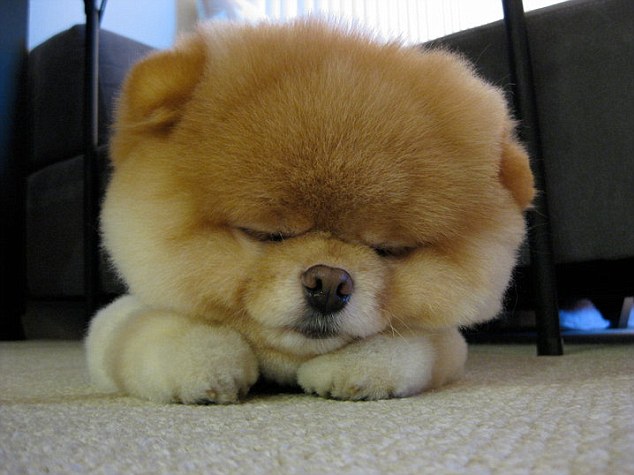
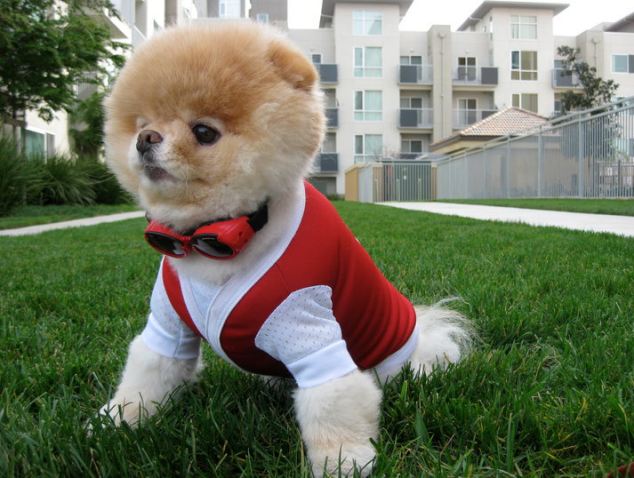
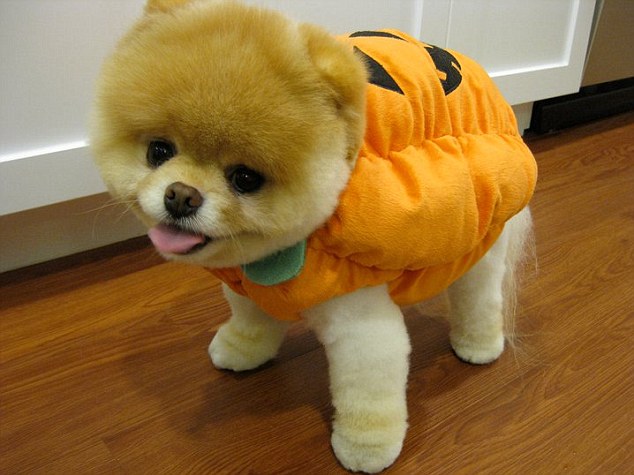
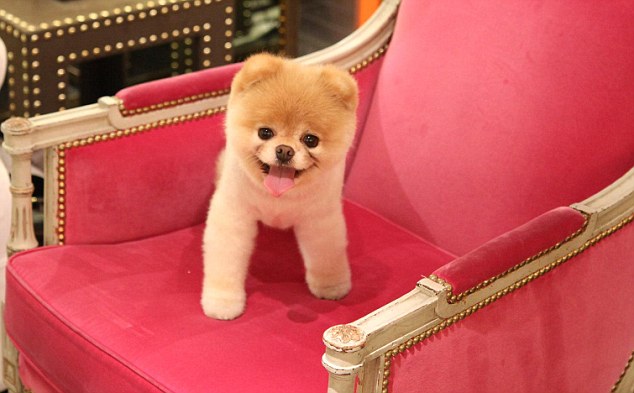
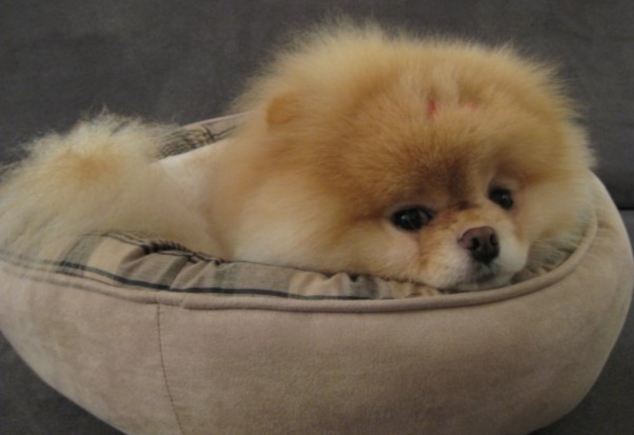
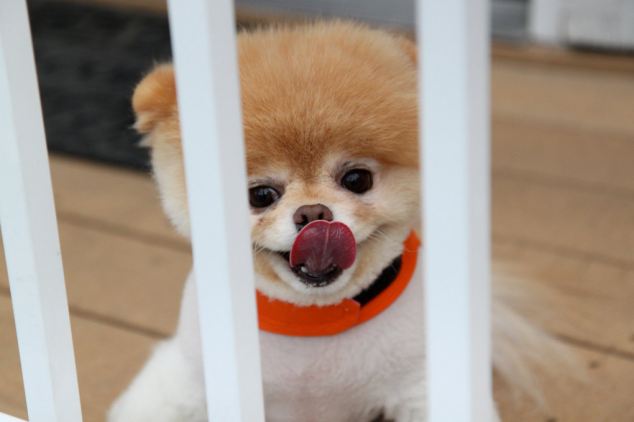
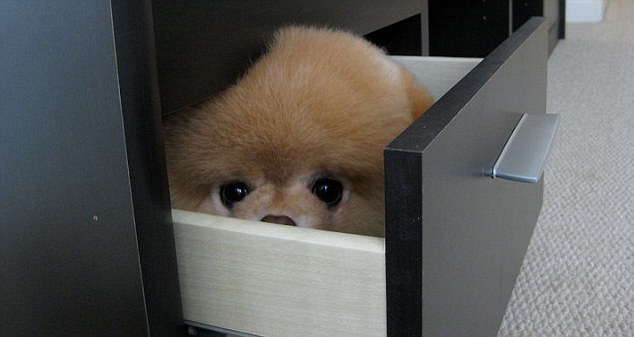
Boo Dog - He has nearly two million fans in Facebook and a book deal. But Boo isn't a reality TV star, actor or a pop singer - he's a pet dog.
The five-year-old Pomeranian has the fame most celebrities dream of after amassing 1.79million fans on social networking site Facebook.
And Boo is also a hit with the ladies. He attracted the attention of Hollywood stars including Khloe Kardashian, who posted a picture of the dog on her blog last year and singer Ke$ha, who Tweeted that Boo was 'her new boyfriend.'
Since then, Boo's Facebook page, launched in 2009, has gone viral, receiving thousands of new fans a day.
His owner, who has concealed her identity and location in the U.S. and uses the pseudonym J.H Lee told Time:'My friends loved looking at pictures of him.
'We started the first Facebook page as a joke.'
Boo shot to fame when he realised the key to looking so good in photographs is a great haircut.
The canine's unique look is down to an happy accident - his long hair was so knotted, it had to be shaved off.
Lee said: 'The groomer said they wouldn't even be able to get a brush through him.
'I was really upset when I heard that. But when I picked him up, I found he was actually really cute that way.'
Boo has been busy promoting his new book, a collection of photographs entitled 'Boo, the life of the world's cutest dog.'
The £8.99 book features exclusive photographs of Boo 'doing all his favorite things, lounging around, playing with friends, exploring the whole wide world, and making those famous puppy-dog eyes.'
And judging by his success so far, it's sure to be a bestseller.
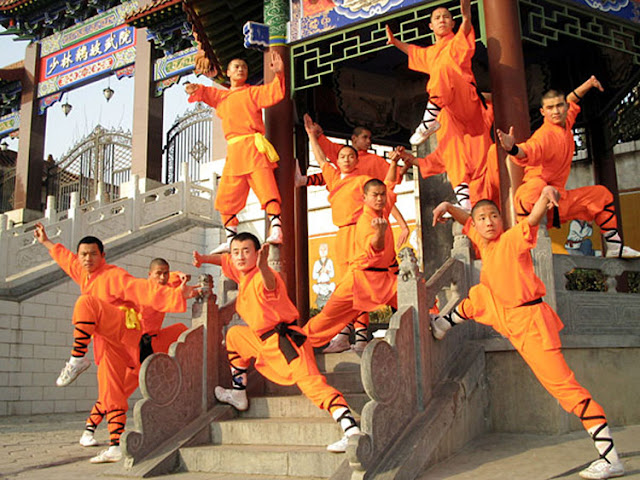
Kung Fu martial arts, also referred to by the Mandarin Chinese term wushu (simplified Chinese: 武术; traditional Chinese: 武術; pinyin: wǔshù) and popularly as kung fu (Chinese: 功夫; pinyin: gōngfu), are a number of fighting styles that have developed over the centuries in China. These fighting styles are often classified according to common traits, identified as "families" (家, jiā), "sects" (派, pài) or "schools" (門, mén) of martial arts. Examples of such traits include physical exercises involving animal mimicry, or training methods inspired by Chinese philosophies, religions and legends. Styles which focus on qi manipulation are labeled as internal (内家拳, nèijiāquán), while others concentrate on improving muscle and cardiovascular fitness and are labeled external (外家拳, wàijiāquán). Geographical association, as in northern (北拳, běiquán) and southern (南拳, nánquán), is another popular method of categorization.
History
The genesis of Chinese martial arts has been attributed to the need for self-defense, hunting techniques and military training in ancient China. Hand-to-hand combat and weapons practice were important in training ancient Chinese soldiers.
While it is clear that various forms of martial arts have been practiced in China since antiquity, very little detail on specifics can be recovered for times predating the 16th century. By contrast, there is a variety of sources on the topic from the Qing period.
Detailed knowledge about the state and development of Chinese martial arts becomes available from the Nanjing decade (1928-1937), as the Central Guoshu Institute established by the Kuomintang regime made an effort to compile an encyclopedic survey of martial arts schools. Since the 1950s, the People's Republic of China has organized Chinese martial arts as an exhibition and full-contact sport under the heading of Wushu.
Legendary origins
According to legend, Chinese martial arts originated during the semi-mythical Xia Dynasty (夏朝) more than 4,000 years ago. It is said the Yellow Emperor Huangdi (legendary date of ascension 2698 BCE) introduced the earliest fighting systems to China. The Yellow Emperor is described as a famous general who, before becoming China’s leader, wrote lengthy treatises on medicine, astrology and the martial arts. One of his main opponents was Chi You (蚩尤) who was credited as the creator of jiao di, a forerunner to the modern art of Chinese Wrestling.
Early history
The earliest references to Chinese martial arts are found in the Spring and Autumn Annals (5th century BCE), where a hand to hand combat theory, including the integration of notions of "hard" and "soft" techniques, is mentioned. A combat wrestling system called juélì or jiǎolì (角力) is mentioned in the Classic of Rites (1st century BCE). This combat system included techniques such as strikes, throws, joint manipulation, and pressure point attacks. Jiao Di became a sport during the Qin Dynasty (221–207 BCE). The Han History Bibliographies record that, by the Former Han (206 BCE – 8 CE), there was a distinction between no-holds-barred weaponless fighting, which it calls shǒubó (手搏), for which "how-to" manuals had already been written, and sportive wrestling, then known as juélì or jiǎolì (角力). Wrestling is also documented in the Shǐ Jì, Records of the Grand Historian, written by Sima Qian (ca. 100 BCE).
In the Tang Dynasty, descriptions of sword dances were immortalized in poems by Li Bai. In the Song and Yuan dynasties, xiangpu contests were sponsored by the imperial courts. The modern concepts of wushu were fully developed by the Ming and Qing dynasties.
Philosophical influences
The ideas associated with Chinese martial arts changed with the evolution of Chinese society and over time acquired some philosophical bases: Passages in the Zhuangzi (庄子), a Daoist text, pertain to the psychology and practice of martial arts. Zhuangzi, its eponymous author, is believed to have lived in the 4th century BCE. The Tao Te Ching, often credited to Lao Zi, is another Daoist text that contains principles applicable to martial arts. According to one of the classic texts of Confucianism, Zhou Li (周禮/周礼), Archery and charioteering were part of the "six arts" (simplified Chinese: 六艺; traditional Chinese: 六藝; pinyin: liu yi, including rites, music, calligraphy and mathematics) of the Zhou Dynasty (1122–256 BCE). The Art of War (孫子兵法), written during the 6th century BCE by Sun Tzu (孫子), deals directly with military warfare but contains ideas that are used in the Chinese martial arts.
Daoist practitioners have been practicing Tao Yin, physical exercises similar to Qigong that was one of the progenitors to Tai Chi Chuan, from at least as early as 500 BCE. In 39–92 CE, "Six Chapters of Hand Fighting", were included in the Han Shu (history of the Former Han Dynasty) written by Pan Ku. Also, the noted physician, Hua Tuo, composed the "Five Animals Play"—tiger, deer, monkey, bear, and bird, around 220 BCE. Daoist philosophy and their approach to health and exercise have influenced the Chinese martial arts to a certain extent. Direct reference to Daoist concepts can be found in such styles as the "Eight Immortals" which uses fighting techniques that are attributed to the characteristics of each immortal.
Shaolin and temple-based martial arts
Shaolin Monastery
The Shaolin style of wushu is regarded as amongst the first institutionalized Chinese martial arts. The oldest evidence of Shaolin participation in combat is a stele from 728 CE that attests to two occasions: a defense of the Shaolin Monastery from bandits around 610 CE, and their subsequent role in the defeat of Wang Shichong at the Battle of Hulao in 621 CE. From the 8th to the 15th centuries, there are no extant documents that provide evidence of Shaolin participation in combat.
Between the 16th and 17th centuries there are at least forty sources which provide evidence that not only did the monks of Shaolin practice martial arts, but martial practice had become such an integral element of Shaolin monastic life that the monks felt the need to justify it by creating new Buddhist lore, the earliest appearance of the frequently cited legend concerns Bodhidharma's supposed foundation of Shaolin Kung Fu dates to this period. The origin of this legend has been traced to the Ming period's Yijin Jing or "Muscle Change Classic", a text written in 1624 attributed to Bodhidharma.
References of martial arts practice in Shaolin appear in various literary genres of the late Ming: the epitaphs of Shaolin warrior monks, martial-arts manuals, military encyclopedias, historical writings, travelogues, fiction and poetry. However these sources do not point out to any specific style originated in Shaolin. These sources, in contrast to those from the Tang period, refer to Shaolin methods of armed combat. This include a skill for which Shaolin monks had become famous—the staff (gùn, Cantonese gwan). The Ming General Qi Jiguang included description of Shaolin Quan Fa (Pinyin romanization: Shào Lín Quán Fǎ or Wade-Giles romanization Shao Lin Ch'üan Fa, 少 林 拳 法 "fist principles"; Japanese pronunciation: Shorin Kempo or Kenpo) and staff techniques in his book, Ji Xiao Xin Shu (紀效新書), which can be translated as "New Book Recording Effective Techniques". When this book spread to East Asia, it had a great influence on the development of martial arts in regions such as Okinawa and Korea.
Styles
China has a long history of martial traditions that includes hundreds of different styles. Over the past two thousand years many distinctive styles have been developed, each with its own set of techniques and ideas. There are also common themes to the different styles, which are often classified by "families" (家, jiā), "sects" (派, pai) or "schools" (門, men). There are styles that mimic movements from animals and others that gather inspiration from various Chinese philosophies, myths and legends. Some styles put most of their focus into the harnessing of qi, while others concentrate on competition.
Chinese martial arts can be split into various categories to differentiate them: For example, external (外家拳) and internal (内家拳). Chinese martial arts can also be categorized by location, as in northern (北拳) and southern (南拳) as well, referring to what part of China the styles originated from, separated by the Yangtze River (Chang Jiang); Chinese martial arts may even be classified according to their province or city. The main perceived difference between northern and southern styles is that the northern styles tend to emphasize fast and powerful kicks, high jumps and generally fluid and rapid movement, while the southern styles focus more on strong arm and hand techniques, and stable, immovable stances and fast footwork. Examples of the northern styles include changquan and xingyiquan. Examples of the southern styles include Bak Mei, Wuzuquan, Choy Li Fut and Wing Chun. Chinese martial arts can also be divided according to religion, imitative-styles (象形拳), and family styles such as Hung Gar (洪家). There are distinctive differences in the training between different groups of the Chinese martial arts regardless of the type of classification. However, few experienced martial artists make a clear distinction between internal and external styles, or subscribe to the idea of northern systems being predominantly kick-based and southern systems relying more heavily on upper-body techniques. Most styles contain both hard and soft elements, regardless of their internal nomenclature. Analyzing the difference in accordance with yin and yang principles, philosophers would assert that the absence of either one would render the practitioner's skills unbalanced or deficient, as yin and yang alone are each only half of a whole. If such differences did once exist, they have since been blurred.
Training
Chinese martial arts training consists of the following components: basics, forms, applications and weapons; different styles place varying emphasis on each component. In addition, philosophy, ethics and even medical practice are highly regarded by most Chinese martial arts. A complete training system should also provide insight into Chinese attitudes and culture.
Basics
The Basics (基本功) are a vital part of any martial training, as a student cannot progress to the more advanced stages without them; Basics are usually made up of rudimentary techniques, conditioning exercises, including stances. Basic training may involve simple movements that are performed repeatedly; other examples of basic training are stretching, meditation, striking, throwing, or jumping. Without strong and flexible muscles, management of Qi or breath, and proper body mechanics, it is impossible for a student to progress in the Chinese martial arts. A common saying concerning basic training in Chinese martial arts is as follows:
内外相合,外重手眼身法步,内修心神意氣力。
Which can be translated as:
Train both Internal and External.
External training includes the hands, the eyes, the body and stances. Internal training includes the heart, the spirit, the mind, breathing and strength.
Stances
Stances (steps or 步法) are structural postures employed in Chinese martial arts training. They represent the foundation and the form of a fighter's base. Each style has different names and variations for each stance. Stances may be differentiated by foot position, weight distribution, body alignment, etc. Stance training can be practiced statically, the goal of which is to maintain the structure of the stance through a set time period, or dynamically, in which case a series of movements is performed repeatedly. The horse-riding stance (骑马步/马步 qí mǎ bù/mǎ bù) and the bow stance are examples of stances found in many styles of Chinese martial arts.
Meditation
In many Chinese martial arts, meditation is considered to be an important component of basic training. Meditation can be used to develop focus, mental clarity and can act as a basis for qigong training.
Use of qi
The concept of qi or ch'i (氣/气) is encountered in a number of Chinese martial arts. Qi is variously defined as an inner energy or "life force" that is said to animate living beings; as a term for proper skeletal alignment and efficient use of musculature (sometimes also known as fa jin or jin); or as a shorthand for concepts that the martial arts student might not yet be ready to understand in full. These meanings are not necessarily mutually exclusive.The existence of qi as a measurable form of energy as discussed in traditional Chinese medicine has no basis in the scientific understanding of physics, medicine, biology or human physiology.
There are many ideas regarding the control of one's qi energy to such an extent that it can be used for healing oneself or others: the goal of medical qigong. Some styles believe in focusing qi into a single point when attacking and aim at specific areas of the human body. Such techniques are known as dim mak and have principles that are similar to acupressure.
Weapons training
Most Chinese styles also make use of training in the broad arsenal of Chinese weapons for conditioning the body as well as coordination and strategy drills.Weapons training (qìxiè 器械) are generally carried out after the student is proficient in the basics, forms and applications training. The basic theory for weapons training is to consider the weapon as an extension of the body. It has the same requirements for footwork and body coordination as the basics. The process of weapon training proceeds with forms, forms with partners and then applications. Most systems have training methods for each of the Eighteen Arms of Wushu (shíbābānbīngqì 十八般兵器) in addition to specialized instruments specific to the system.
A 9 year old Caine Monroy From Los Angeles, California boy who spent most of his time in his busy father’s auto parts shop decided to spend his summer making his dream of running his very own arcade a reality.After devoting his entire summer vacation to building, collecting and designing his own cardboard box games, displays and the toys you’d win after redeeming your tickets, he would wait for customers to come. And he would wait, and waited even longer, even refusing to close up shop early in case a customer arrived. His Dad, George Monroy says with a smile
Caine is recruiting STAFF to help the Caine’s Arcade Foundation. Buy your Caine’s Arcade t-shirt to help us find, foster, and fund creativity and entrepreneurship in more amazing kids. $15 plus shiping, order from our store. We’re going to make Caine a new shirt that says “BOSS”. The cardboard arcade would have been only the stuff of family photo albums until his first customer finally stopped by the East Los Angeles shop for a part to his ’96 Corolla. The customer – Nirvan Mullick, happens to be a filmmaker and took much interest in the boy’s story while he was waiting. He saw the amazing series of Midway-style cardboard games and challenges that young Caine had created — each with its own series of prizes tacked on a board. The young boy even had a business model built into his imaginary arcade: Visitors could buy either a four-game pass for $1 or the 500-game “fun pass” for the slightly higher price, $2. Impressed by the boy’s ingenuity and entrepreneurship, Mullick decided to ask his father for permission to make Caine’s story into a short film. Of which has gone viral and has granted Caine notoriety in ways unimaginable (seriously, watch the video above to see how Caine’s Arcade became viral).
Mullick captured Caine’s Joy when people from all around came together to play his games and support his dream. Within 24 hours of Caine’s Arcade going viral, a website had been set up to collect donations for Caine’s college fund, and in less than a day the total had hit $100,000. Awesome…!
My Strange Addiction on TLC: Girl who can't stop drinking GASOLINE
If smelling gasoline weren't a health hazard enough, meet the girl who drinks it.
Lifting a red gas canister before the cameras, a girl named Shannon demonstrates her claimed addiction of drinking gasoline for TLC'S television program My Strange Addiction.
'It tingles at first and then it, it burns the back of my throat,' Shannon says describing her toxic habit which reaches up to 12 teaspoons a day.
'Even though it hurts me, it makes me feel good,' she says, of either licking the cap or drinking it straight out of the canister which she says is her favorite way.
Her mother says she at first didn't believe it when she heard but then she smelt the undeniable smell of the substance on her daughter's breath.
'I take the cap off and I breathe in the fumes that come forcing out of the can,' Shannon says, demonstrating her behavior.
TLC approximates that she has consumed over five gallons in the last year alone.
'Drinking gasoline can cause burns, vomiting, diarrhea and, in very large amounts, drowsiness or death,' the New York State Department of Health writes. For those reason, 'it is toxic,' they explain.
The full episode, set to premiere on Sunday, covers several other strange addictions documented by the television program including a woman who carries a doll's head wherever she goes and another who finds a need to sniff Pine-Sol cleaning liquid every 15 minutes.
Shannon's addiction to sipping gasoline comes days after a North Carolina man died after accidentally drinking from a jar containing the same liquid.
Gary Allen, 43, immediately spit out the mistaken liquid which also got on his clothes when finding it on the kitchen sink of his friend's apartment and mistaking it for a beverage.
In his next mistake, he later stepped outside to light a cigarette, igniting the blaze that consumed him.
The highly flammable liquid was said to have been used to help remove grease from his friend's hands who's a mechanic.
Canton Tower formerly known as Guangzhou TV And Sightseeing Tower. is an observation tower near Chigang Pagoda, Haizhu, Guangzhou, Guangdong, China. It was topped-out in 2009 and became operational on September 29, 2010 for the 2010 Asian Games. The tower is the tallest tower in the world, replaced the CN Tower at 553 m in Canada, which previous held the title for 34 years. Also the tallest structure in China (preceded by SWFC) and East Asia, the Canton Tower is the fifth tallest structure and the second freestanding structure in the world (after Burj Khalifa). It is named after "Canton", the traditional European name of the city.




.jpg)
.jpg)
.jpg)
.jpg)
.jpg)
.jpg)
.jpg)
.jpg) My
My .jpg)
.jpg)


